Symplex Ceramic & Graphene Coatings — 7H, 9H and 10H
Symplex ceramic coatings publish the numbers most brands leave off the label: rated hardness (7H, 9H, 10H) and contact angle (up to 118°). The graphene coatings are built on a genuine polysilazane backbone with graphene oxide grafted onto the chain rather than blended in — a different class of chemistry from a silica spray with graphene printed on the bottle. The Silex quartz range covers SiO2 installs from a wipe-on sealant up to a professional 10H clear coat.
Coatings reward preparation and punish rushed preparation, so the products either side of the install matter as much as the coating itself. Polish with Finesse Primer, wipe with Look See Control Prep to strip polishing oils, then lay the coating with the barrier-layer applicator. If you want protection without a cure window, the sealant range reaches 6–8 months and installs like a wax.
Polysilazane, Quartz and Graphene: What the Labels Mean
Three chemistries run through this collection and they behave differently. Polysilazane — used in the Ceramic Coating 7h and 10h — cures by reacting with moisture in the air into a hard Si-N/Si-O network, and it is what "real ceramic" means when a brand distinguishes it from siloxane. SiO2 quartz — the Silex family — lays a dense silica layer whose density scales with the concentration in the bottle. Graphene oxide is not a coating on its own; in the Symplex products it is grafted onto the polysilazane chain, and its contribution is reduced water spotting and heat dissipation rather than raw hardness. A higher contact angle means water beads tighter and sheets off faster, which is why 118° is quoted on the flagship coatings.
What's in This Collection
-
Lattice High Density Structural Coating — the flagship. Cures two chemical networks at once: a rigid inorganic MQ-resin silicate grid for hardness, thermal stability and UV resistance, and a flexible oleophobic organic matrix for impact resistance and slickness. The resulting Interpenetrating Polymer Network bonds covalently to the substrate, measures physically harder than automotive clear coat, and still flexes with thermal expansion instead of micro-cracking. Contact angle above 115°. 100 ml.
-
Silex Shield 10H Ultra — highest SiO2 concentration in the line. Lays a dense quartz layer curing to a 10H surface with a 118° contact angle, so water sheets rather than sitting. Single-layer application for professional installers. 100 ml.
-
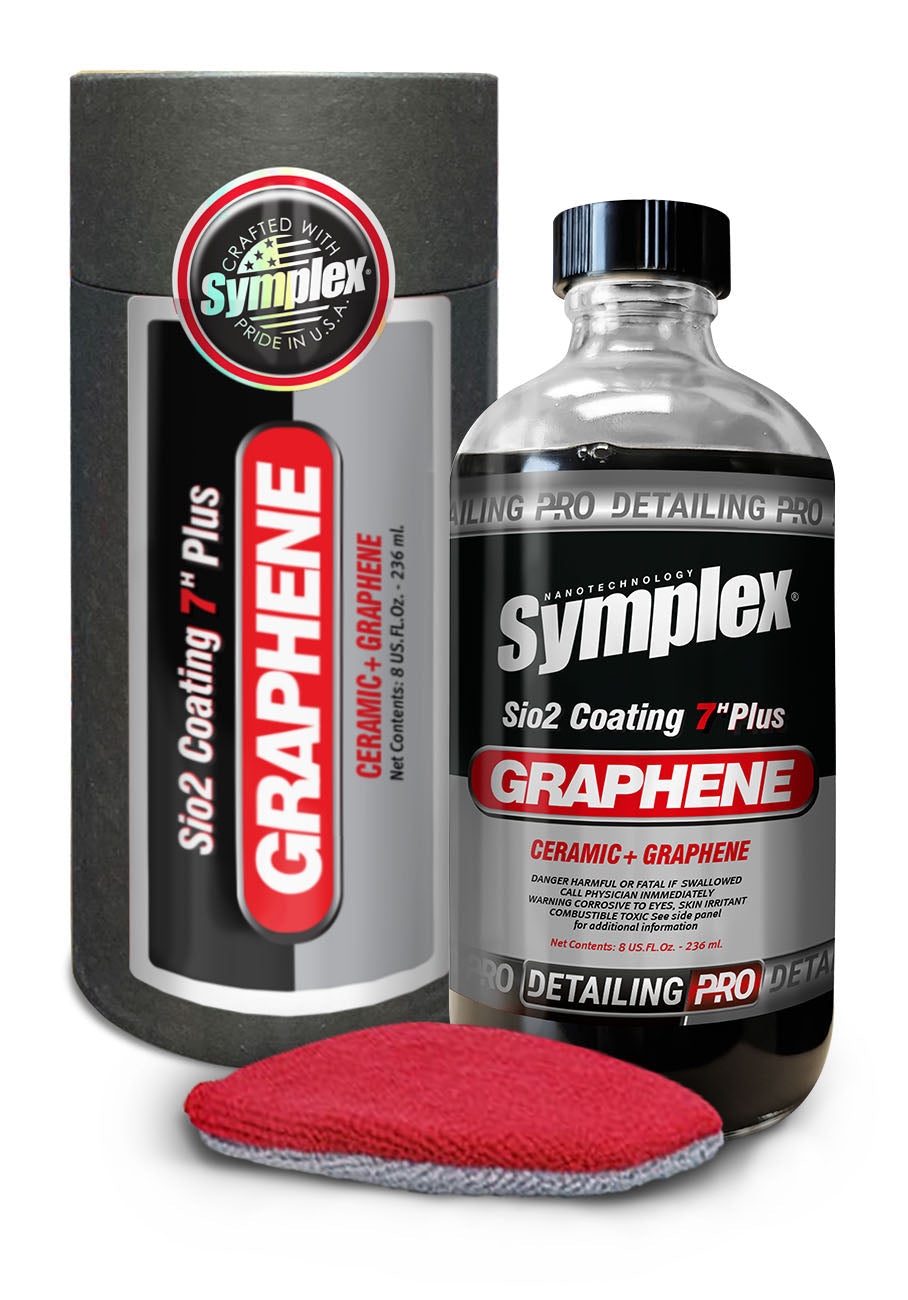
Ceramic Coating 10h and Ceramic Coating 7h — the graphene pair. The 7h is polysilazane with graphene oxide grafted in, 7H rated and rated for roughly a year, in an 8 oz professional fill. The 10h is the high-solids member of the same family — a denser cured film per coat, 10H hardness and a 118° contact angle, in 100 ml.
-
Silex Ceramic 9H Kit — the complete install. Symplex's professional 9H quartz clear coat supplied as a kit with applicator, 100 ml covering a full vehicle.
-
Coating-grade chemistry in easier formats. Silex Reactive OPSZ cross-links organic polysilazane on the surface into a genuine ceramic-infused layer while applying like a sealant, and layers over existing coatings as maintenance. Silex Reactive Paste puts silazane chemistry into a hand-applied paste for 6–8 months of protection with no install procedure.
-
Trim, wash-stage and application. Silex Ceramic Trim SiO2 bonds quartz to exterior plastic to restore and hold colour through repeated washing. Spartan Aqua Guard SiO2 goes on the wet vehicle and rinses off, dilutes 1:5 and is listed safe on wheels. The coating applicator has a hydrophobic barrier layer that stops product soaking through to your fingers.
Quick Guide: Which Symplex Coating?
| Coating |
Chemistry |
Rated |
Best For |
| Lattice |
Dual-network IPN (MQ resin + organic) |
115°+ CA |
Flagship installs — hardness with flex |
| Silex Shield 10H Ultra |
Concentrated SiO2 quartz |
10H · 118° |
Max durability from a single coat |
| Ceramic Coating 10h |
High-solids polysilazane + grafted graphene |
10H · 118° |
Multi-year professional packages |
| Silex Ceramic 9H Kit |
SiO2 quartz clear coat |
9H |
First install — coating and applicator together |
| Ceramic Coating 7h |
Polysilazane + graphene oxide |
7H · ~1 year |
Annual protection, 8 oz shop fill |
| Silex Reactive Paste |
Silazane ceramic paste |
6–8 months |
Ceramic behaviour, hand application |
| Silex Reactive OPSZ |
Organic polysilazane cross-link |
Wipe-on |
Maintenance layering over a coating |
Prep Is the Whole Job
A coating locks in whatever is underneath it for as long as it lasts, which is exactly why prep is not the boring part. Decontaminate — Iron Wheel Remover is listed safe on paint and glass and colour-changes as it reacts, and BondLift lifts tar, adhesive and rubber transfer without scraping. Correct to the level the customer is paying for. Prime with Finesse, or polish normally and panel-wipe with Look See Control Prep. Then coat. Skipping the panel wipe is the single most common reason a coating fails early — the coating bonds to polishing oil, and the oil eventually leaves.
Symplex Ceramic Coating FAQs
What does 9H or 10H actually mean on a ceramic coating?
It is a pencil-hardness style rating of the cured film — a scale for scratch resistance, not a promise that the coating stops rock chips or automatic-carwash swirls. A harder film resists marring better and holds gloss longer, but nothing in this collection makes paint immune to physical damage. Treat the rating as a way to rank products within a range, not as a durability guarantee.
Is a graphene coating better than a ceramic coating?
Not better — different emphasis. In the Symplex range graphene oxide is grafted onto a polysilazane ceramic backbone, so you get a ceramic coating with graphene's contribution added: reduced water spotting and better heat dissipation. If water spotting on dark paint is your problem, the graphene coatings are the answer. If you want maximum film density and contact angle, Silex Shield 10H Ultra or Lattice are the picks.
Can I apply a Symplex coating myself?
The Silex 9H Kit ships with the applicator and is the easiest entry point, and the paste and OPSZ sealants apply by hand with no install procedure at all. The 100 ml professional coatings — Lattice, Silex Shield, Ceramic Coating 10h — assume an installer's environment: clean, controlled, out of direct sun, with time for prep and cure. If you cannot control those conditions, a 6–8 month sealant will serve you better than a rushed coating.
How much coating does 100 ml cover?
Symplex lists the 100 ml Silex 9H fill as covering a full vehicle, and the flagship coatings are formulated for single-layer application, so a 100 ml bottle is a per-car unit rather than a bulk buy. The Ceramic Coating 7h comes in a larger 8 oz professional fill for shops running coatings regularly.
How do I wash a coated car without ruining the coating?
Use a pH-neutral shampoo. Platinum Car Wash is pH 7.0–7.5 specifically so it does not shorten the life of what is underneath, and Silica Wash adds SiO2 back during the wash. Top up with Silex Reactive OPSZ or a Spartan spray as maintenance. Avoid alkaline shampoos — they clean well and quietly shorten coating life.
What about trim and wheels?
Silex Ceramic Trim SiO2 is the quartz treatment for exterior plastic — it restores colour to greyed trim and holds it through washing, unlike a dressing that rinses off. For wheels, Spartan Aqua Guard is the one in the family Symplex also lists as wheel-safe.
Detailing Guides
Related Collections
Auto Care Genius · Kissimmee, FL · Ships nationwide · Shop All Symplex Products



 -5%
-5%


 -10%
-10%
 -15%
-15%


