How to Protect Car Paint From Sun Damage (and When It Needs a Repaint)
Sun damage is slow. UV works on your paint every day the car sits outside, and heat helps it along. The hood, roof and trunk take the most sun, so they often go dull while the sides still shine.
Quick Answer
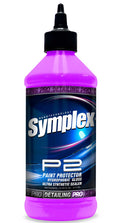
To protect car paint from sun damage, park in a garage or shade, wash it regularly with a pH-neutral soap, and get bird droppings and bugs off right away. Then keep a layer of protection on the paint, like Quan Armor ceramic spray, which its label says repels water, dirt and UV rays, or Symplex P2 sealant, which Symplex rates for 6–8 months. Light oxidation can often be polished out; clear coat that's turning white or peeling usually needs a repaint.
What the Sun Does to Car Paint
On a modern car, the paint is a colored basecoat under a clear coat, and the clear does the UV work. It's built with UV absorbers (PPG packs its clearcoat with them), and they wear out over the years. Once they do, UV gets through to the color and starts breaking it down. The result is fading, dullness and even peeling.
What oxidized paint looks like
Maaco calls it oxidation when UV-worn paint loses its smooth, reflective quality and turns chalky. The classic case is older single-stage paint, with no separate clear coat. Detailing educator Mike Phillips describes a chalky, whitish film, even on paint that was never white.
Clear coat failure: cloudy, then peeling
On a clear-coated car, a hood or roof that's going cloudy or white usually isn't oxidation. Phillips calls it clear coat failure. The damage runs through the whole thickness of the clear, so polishing the surface can't fix it for good. It starts as a slightly cloudy, whitish haze and ends with the clear flaking off, leaving the flat basecoat showing.
Heat bakes contamination on
Ford of Europe says paint can soften and expand under intense sunlight, then contract as it cools, so grime, bird droppings included, attaches itself to the surface. Left there, it can leave a permanent impression that needs specialist treatment to remove. And CarPro says bug guts "harden to the paint and may even etch if left too long."
Desert and high-altitude sun
The EPA says clear skies let virtually all UV through, and UV intensity rises about 6% for every kilometer above sea level. Maaco names the Southwest and Florida among the places where a car's exterior is "under constant attack from the elements." If your car lives in Phoenix, Las Vegas, El Paso or Albuquerque, the routine below matters even more, and our guide to washing a car with hard water in desert heat covers the wash side.
Can You Fix Sun Damage on a Car?
Sometimes. It depends on how deep the damage goes.
| What you see | What it usually means | Can it be fixed? |
|---|---|---|
| Top panels dull or faded, clear coat still intact | UV wear at the surface | Often, by polishing |
| A chalky, whitish film on older single-stage paint (white paint may just look dull) | Oxidation | Usually, if it isn't extreme |
| Cloudy, milky or white patches on a clear-coated car | Early clear coat failure | Not by polishing. It usually means repainting the panel |
| A dull or etched mark where a dropping or bug sat | Etching | Maybe. Ford says it can need specialist treatment |
| Clear coat flaking or peeling | Advanced clear coat failure | Not by polishing. It needs a repaint, often just the affected panels |
| Oxidation through the color, or failed paint | Paint failure | Not by polishing. A repaint |
Polishing works by taking a thin layer off and exposing healthier paint underneath. That's also the limit. PPG says that without 2 mils (0.002 inches) of clear coat, UV reaches the paint below, so any cut and buff has to leave at least that much.
Polishing it yourself? Only where the clear is intact. Start gentle, on a test spot; our guide to removing scratches from car paint covers it. Then protect the paint: Maaco says protecting an intact clear coat is far more effective and more affordable than restoring faded paint later.
What You'll Need
- A pH-neutral car soap: Quan Pink, or Symplex Silica Wash.
- A waterless wash / quick detailer: Quan EcoX, or Symplex Silica Waterless Wash.
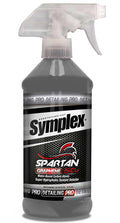
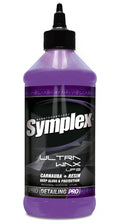
- Paint protection: Quan Armor, Symplex P2, Symplex Spartan Graphene or Symplex Ultra Wax UP3.
- A bug remover: CarPro BugOut.
- Clean microfiber towels and an applicator pad.
- A breathable, water-resistant car cover if the car lives outside.
- For the plastics: Quan Finish for the dash, CarPro CQuartz DLight for headlights.
- Gloves, eye protection and a cool storage spot out of kids' reach. Read each label's cautions first, and don't leave the bottles in a hot car.
How to Protect Car Paint From the Sun, Step by Step

The Wash · pH Neutral (SDS)
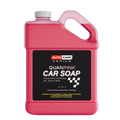
Quan Pink Car Soap Concentrated from $16.99
Its label says it cleans without stripping wax and protects your surfaces from fading and cracking. 32 oz, gallon and 5-gallon.
Shop NowPink's safety data sheet lists it as pH neutral. Symplex says its Silica Wash is pH-neutral too, won't strip existing waxes or sealants, and adds UV resistance over traditional car washes.

Quick Detailer · Waterless
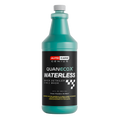
Quan EcoX Waterless Quick Detailer 3 in 1 Wash from $19.99
Waterless wash and quick detailer that cleans, shines and adds a layer of hydrophobic protection. 32 oz and gallon.
Shop NowSymplex's version is Silica Waterless Wash, mixed 1:64. For baked-on bugs, use CarPro BugOut in the shade and don't leave it on longer than 5 minutes. CarPro also says to test a hidden spot first, keep it off hot surfaces, skin and eyes, and not to ingest it. Our bug removal guide has the method.
Paint Protection: Ceramic Spray, Sealant, Wax or Coating
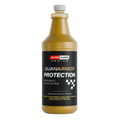
Quan Armor: the ceramic spray
Quan Armor is our house ceramic spray. Its label says it bonds directly to the clear coat for an ultra-slick, hydrophobic shield, and that it enhances gloss and deepens color. Shake it, mist a 3x3 ft section of a clean, dry, cool car out of direct sun, spread it right away with a microfiber, then flip to a dry side and buff. Give it 4–6 hours before water.

Ceramic Spray · Repels UV
Quan Armor Protection Ceramic Shielding $23.99
Ceramic spray that bonds to the clear coat and, per its label, repels water, dirt and UV rays. 32 oz.
Shop NowSealants, Waxes and Coatings: Each Maker's Rating
Treat each number as the maker's rating, not a promise.
| Product | Type | Maker's durability | Maker's UV claim | Application notes |
|---|---|---|---|---|
| Symplex P2 | Synthetic sealant | 6–8 months | UV and oxidation resistance | Haze, buff; 12 hours before water |
| Symplex Spartan Graphene | Spray sealant | 4+ months; refresh every 2–3 months | Higher resistance to heat, UV and chemicals | Shade, cool surface*; 3–4 hours before water |
| Symplex Ultra Wax UP3 | Carnauba + resin wax | 4–6 months | Resists UV degradation | Haze, buff; 12–24 hours before water |
| CarPro Reload 2.0 | SiO2 spray sealant | Up to 3 months stand-alone | "Excellent UV protection" | No direct sun; wax-free paint |
| CarPro HydrO2 Lite | Spray-and-rinse sealant | 3 months or more | Significant UV protection | No sun or hot surface |
| CarPro CQuartz Lite 2.0 | Ceramic coating | 2 years | Protection against UV rays | Can go on in direct sun |
| CarPro CQuartz UK 3.0 | Ceramic coating | 2–5 years | "Protection from UV rays" | No direct sun or hot surface |
*From Symplex's Spanish-language directions for Spartan Graphene.
Symplex: sealant or wax
Symplex calls P2 the top-tier protection in its wax and sealant range and recommends a clay bar treatment and paint correction first. Ultra Wax UP3 blends carnauba with cross-link resin, and Symplex says it holds up to UV better than natural waxes. Driving an older car? Symplex lists G5 Carnauba Paste Wax for clear coats and single-stage paints. Our wax vs sealant guide covers layering them.

Sealant · 6–8 Months (Symplex)
Symplex P2 Synthetic Ultra Paint Protector Sealer from $19.01
100% synthetic cross-linking polymer sealant. Pint, quart and gallon.
Shop NowCarPro sealants and coatings
Want years, not months? Look at CarPro's CQuartz Lite 2.0 and CQuartz UK 3.0 coatings in the table. Our ceramic spray vs ceramic coating guide compares the routes.
The Symplex Swap
Symplex's answer to Reload 2.0 and HydrO2 Lite: Spartan Graphene and Spartan Aqua Guard.

Symplex Spartan Graphene SiO2 Sealant from $22.37
Spray sealant Symplex rates for 4+ months, against CarPro's up to 3 months for Reload 2.0.

Symplex Spartan Aqua Guard SiO2 from $26.49
Spray-and-rinse SiO2 like HydrO2 Lite, or mix 1:5 and wipe. Symplex says it protects against rain, dirt, contaminants and UV exposure.
Symplex manufactures in Orlando.
Pro Tip
Apply protection early in the morning or in the garage: Armor, Aqua Guard, Reload 2.0 and HydrO2 all say no direct sun. Wear gloves and eye protection. The safety data sheets for Quan Armor, Symplex P2 and Spartan Graphene all call for both, and CarPro lists hand protection and a painter's mask for its CQuartz coatings, DLight included. Armor's sheet carries a WARNING signal word for serious eye irritation, and its label adds that it may be harmful if swallowed or inhaled and causes mild skin irritation. P2's sheet carries a DANGER signal word: it's a combustible liquid, causes skin irritation, is suspected of damaging fertility and can damage organs through prolonged or repeated exposure. Don't breathe its vapors, and store it cool, away from heat and hot surfaces.
Headlights: Seal Them After You Restore Them
AAA says plastic headlights can turn foggy and discolored from oxidation caused by UV exposure. Its 2018 study found cloudy headlights put out only 20% of the light new ones do, and restoring them got about 70% back. After a restoration, AAA says to apply a lens UV sealant.
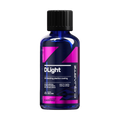
CarPro CQuartz DLight is one. CarPro says its UV absorbers and light stabilizers block UVA and UVB rays, and rates it for up to 3 years of UV protection. It goes on a clean, prepped lens, so restore a cloudy one first. Apply it to a cool, dry lens out of direct sun and keep it out of the elements for 12–36 hours. CarPro warns the bottle is under pressure: point it away from your face and wear gloves when opening it.

Headlights, PPF & Plastics · Up to 3 Years (CarPro)
CarPro CQuartz DLight Anti-UV Coating $34.99
Ceramic UV coating for headlights, paint protection film, plastics, vinyl and paint. 10 ml.
Shop NowAnd the Dashboard
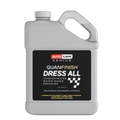
For the dash, Quan Finish is a water-based silicone dressing, and its label says it protects surfaces from harmful UV rays that can cause premature aging, cracking, fading and peeling. Clean with an all-purpose degreaser first, apply it diluted 50/50 for a natural gloss finish, remove any excess and let it dry. Its label warns to avoid prolonged skin contact and eye contact, not to inhale the vapors, and to use it only in a well-ventilated area.

Dash, Vinyl & Plastic · UV
Quan Finish Dress All Concentrated Water Based Dressing from $21.99
Dressing for vinyl, plastic, leather, rubber and tires. 32 oz, gallon and 5-gallon.
Shop NowSymplex's dash pick is Plasti-K Xtreme Internal, a non-silicone dressing Symplex says leaves a non-reflective satin finish and blocks harmful UV rays. More in our guide to cleaning car interior plastics and vinyl.
Frequently Asked Questions
Can you fix sun damage on cars?
Sometimes. Light oxidation can often be polished out. Clear coat that's turning cloudy or white, or peeling, can't be polished back and usually needs a repaint, often of just the affected panels.
Does wax protect car paint from the sun?
It helps, if you renew it. Maaco says a wax with UV-protective agents, applied every two to three months, adds a temporary shield against the sun. Symplex rates Ultra Wax UP3 for 4–6 months.
Does the sun damage black paint faster?
Usually. Maaco says darker colors like black, navy and deep red tend to fade faster because they absorb more heat.
Does desert sun damage car paint faster?
It can. The EPA says clear skies let virtually all UV through, and Maaco names the Southwest as a region where a car's exterior is under constant attack.
How long does it take for the sun to damage car paint?
There's no set timeline; fading is gradual. Ford of Europe tests paint under nonstop UV light for up to 6,000 hours to simulate five years in the brightest place on earth.
Does WD-40 protect car paint?
Not from the sun. WD-40 Company says its Multi-Use Product is safe on painted metal and helps remove grime and tar, but it doesn't claim to protect paint from UV. Keep it off your headlights, too: the company lists polycarbonate headlight lenses as a surface to avoid.
How much does PPF cost for a car?
There's no standard price. Paint protection film is usually installed by a pro, and quotes depend on how much of the car you cover, the film and the shop. Get a few local quotes.
Related Reading
Wash It. Shade It. Protect It.
Quan Pink for the weekly wash, Quan EcoX for quick details and Quan Armor for a layer that repels water, dirt and UV rays.
Shop Quan Armor →