How to Apply a Ceramic Spray Coating Without Streaks (Step by Step)
Quick Answer
To apply a ceramic spray coating: wash and fully dry the car, work in shade on a cool panel, mist the product onto a folded microfiber towel — not onto the paint — spread half a panel at a time, then buff immediately with a second dry towel. Keep it dry overnight.
You have the bottle, an afternoon, and a label that says “spray on, wipe off.” True, and not much help — everything that goes wrong with a ceramic spray goes wrong in what the label leaves out: panel temperature, towel count, and whether the product went onto the paint or onto the towel. This is how to use ceramic spray coating from the wash through the cure, including the parts that decide whether you finish with flat, even gloss or a hood full of high spots. Still deciding which tier of protection you actually need? Start with ceramic spray coating vs a professional ceramic coating.
What You Need to Apply a Ceramic Spray Coating
Short list, and the count matters more than the brand. No polisher, no clay bar, no prep wipe.
| What | How much | Why |
|---|---|---|
| SiO2 ceramic spray | One bottle | Shake well, and follow the label. |
| Clean plush microfiber | 4–6 for a full-size car | One spreads, one buffs. |
| Shade or a ventilated bay | The whole job | Sun is the top reason applications fail. |
| A washed, fully dry car | Before opening the bottle | It bonds to whatever is on the paint. |
| Clay, iron remover, polish | Not required | Real upgrades, genuinely optional. |
Four to six, and the number is about surface area rather than caution — a full-size car has more panel than one buffing towel can clear. A buffing towel collects cured product with every pass; once the fibers load, it stops removing residue and starts redistributing it, which is exactly what a streak is.

The spray we reach for
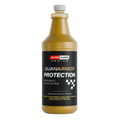
Quan Armor Protection Ceramic Shielding — $23.99
Our house ceramic spray. It's professional-grade and user-friendly, and it bonds directly to the clear coat for an ultra-slick, hydrophobic shield against water, dirt and UV rays. It enhances gloss and deepens color, too. The label's method: lightly mist a 3x3 ft section, spread it right away, then buff with a dry towel. Allow 4–6 hours to cure before it gets wet. 32 oz.
Shop NowPrep: How Clean the Paint Has to Be Before You Spray
The floor is a contact wash with a pH-neutral shampoo and a car dried completely — not damp, dry. The sealant bonds to whatever is sitting on the paint, so if that is road film, road film is what you protected. Technique lives in the car wash soap guide.

The prep wash
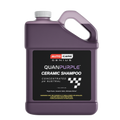
Quan Purple Ceramic Shampoo pH Neutral — $17.99
pH-neutral, high-foaming ceramic shampoo that cleans coated and uncoated paint without stripping it — 1 oz per gallon of water, and the same shampoo you’ll maintain the sealant with. Per the label: use only on cool surfaces, and do not let the product dry on the panel.
Shop NowEverything past a wash is an upgrade. Paint still gritty once it is clean? Clay helps. Orange specks low on the panels? An iron remover is twenty minutes well spent. Swirls have to go before you seal — you cannot polish through a fresh layer. That decontaminate-correct-prep chain is a different job, and the CQuartz install guide walks it end to end. For a spray, wash and dry is a legitimate stopping point.

Optional: the decon step
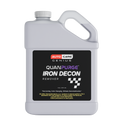
Quan Purge Iron & Decon Remover — $24.99
pH-neutral reactive gel that turns purple as it dissolves embedded brake dust and iron fallout. Spray on a wet, cool surface, dwell 2–3 minutes, agitate, then rinse thoroughly. Wear protective gloves and eye protection.
Shop NowPurge is the one step here with real PPE on the label, so treat it that way. It causes skin irritation and may cause an allergic skin reaction — wear protective gloves and eye protection, and avoid breathing the mist or spray. Keep it off anodized aluminum and any surface that is not clear-coated, do not apply it to hot surfaces or in direct sunlight, and never let it dry on the panel. Rinse thoroughly before it has the chance.
Shade, Panel Temperature, and Why a Hot Hood Ruins the Job
Shade is the easy half. The check that matters takes a second: touch the panel briefly with the back of your hand. If you cannot comfortably hold it there, it is too hot to seal — a better gauge than a thermometer, because a dark hood in Florida sun runs far hotter than the air around it. The reason is mechanical. Sprays in this category are silica carried in solvents, and the layer only levels while those solvents are still wet. On a hot panel they flash off on contact and the silica sets where it landed — a high spot you now have to polish off instead of wipe off. High humidity works against you too: an SiO2 spray cures on atmospheric moisture, so a humid day shortens your working window rather than lengthening it. Shrink the section size and buff the moment the residue clears.
Pro Tip
If the car has been baking, do not just roll it into shade and start — give it twenty to thirty minutes and retest. Sheet metal holds heat long after the paint stops looking hot. And if you are working in a closed garage bay, open it up first: you are aerosolizing a solvent-carried product at arm’s length from your face, so ventilate the space and avoid breathing the mist.
How to Apply Ceramic Spray Coating, Step by Step
The short version of how to apply ceramic spray on a car is one small cycle, repeated half a panel at a time until the car is done. The discipline is what makes it even.
Pro Tip
Unless your label specifically calls for spraying the panel, mist the towel instead. Misting the paint is how cured overspray ends up on window rubber, the cowl, and glass you were never working on — it drifts, it is invisible while wet, and it is a nuisance once set. One exception worth knowing: a whole sub-category of SiO2 products is wet-application or rinse-off, designed to be sprayed straight onto a wet panel and rinsed. Read the bottle in your hand before you decide which kind you are holding.
Why Ceramic Spray Needs Two Towels (and What Each One Does)
The two towels do different jobs, and mixing them up is the most common way a good product finishes badly. The spreading towel is the one you mist; the buffing towel stays bone dry and clears the surface. Fold both into eighths for eight clean faces each, and flip roughly every panel. A towel is spent when it stops clearing and starts smearing — it drags, and the panel comes up hazy. Two things ruin one before you even start: dampness, which dilutes product into streaks, and a past life as a wax towel, whose oils block bonding. Our microfiber towel comparison covers what to look for.
Panel Order for a Whole Car (and Where Not to Spray)
Work top down: roof, hood and trunk, upper sides, lower sides, bumpers last. Stray product migrates downward onto paint you have not treated yet, and the lower panels load towels fastest — use the ones you were about to retire. Never start on the hood in the sun: hottest panel on the car, and the first one anyone looks at.
Skip the wiper swept area — a hydrophobic layer under a blade judders and smears. Keep it off rotors, pad surfaces, and pedals. Matte paint, satin wrap, PPF, and vinyl behave differently from clear coat: check the label for that surface and test an inconspicuous area first.
How Long Ceramic Spray Takes to Cure (The First 24 Hours)
Cure times look contradictory across labels — one hour on one bottle, six to twelve on another, twenty-four to forty-eight on a third — because they are naming three different milestones rather than disagreeing. Touch-dry arrives in minutes, when the surface stops transferring to a towel. Water-safe comes hours later, when rain beads instead of spotting. Fully cured is usually somewhere around a day, which is why the working rule is to keep the car dry overnight. Your product’s label is the authority on its own numbers — read it before you plan the weather around it.
Rain at hour three is usually not a disaster and usually not nothing. Expect water spots and patchy beading on the horizontal panels, because the layer set around droplets. Rinse, dry, then re-mist and level whatever looks uneven.
How Long Does Ceramic Spray Coating Last?
In our experience an SiO2 spray sealant typically holds for weeks to a few months, depending on washes, weather, and prep — and the range is that wide because those three things move the number more than the choice of bottle does. Every SiO2 spray on the market lands in the same order of magnitude. Any single figure you see quoted is one car, one climate, one wash routine. If you want the chemistry behind what an SiO2 sealant actually is, CarPro Reload 2.0 and HydrO2 Foam is the explainer. Here is what genuinely moves the number.
| Variable | Shortens it | Extends it |
|---|---|---|
| Climate | Intense sun, heat, salt air | Mild, dry, low UV |
| Where it parks | Street, full sun, sappy trees | Garage or covered |
| Wash frequency | Rarely washed, grime bakes on | Regular gentle washes |
| Wash chemistry | Dish soap, degreasers, brushes | pH-neutral shampoo, hand wash |
| Prep quality | Over road film, wax, or iron | Clean, decontaminated, dry paint |
How to Tell It’s Time to Reapply
A calendar cannot tell you this; the water can. Wash the car, rinse it, and read what the water does on a tilted panel.
| What the water does | What it means | What to do |
|---|---|---|
| Tight beads that roll straight off | The layer is healthy | Nothing. Keep washing it the same way. |
| Lazy, flat beads that sheet slowly | Protection is fading | Plan a reapply in the next few weeks. |
| Water wetting out flat across the panel | The layer is spent | Wash, dry, and reapply now. |
| Drying now takes twice the towel passes | Confirming tell | Slickness fades before beading does — reapply. |
| Dry fingertips grab instead of glide | Confirming tell | Reapply that panel and check the rest. |
If you would rather work off a schedule than a test, our guide to how often to wash, wax, and detail puts it on a calendar.
Using a Ceramic Spray as a Topper Over a Coating or Wax
One rule settles the ceramic coating topper spray question: a topper extends a healthy layer and hides a failing one. A coating that still beads, just less tightly than it used to, takes a spray happily and comes back to life. A base that is failing unevenly — water flat in some areas and beading in others — is telling you it has broken down in patches, and spraying over it buys a few weeks of appearance while the bare spots stay bare.
What sits underneath changes the behavior. Over a ceramic coating, a spray is sacrificial maintenance: it takes the wear, you refresh it, and the coating underneath does less work. Over an older spray sealant, it simply layers — wash first, then apply, and it bonds to a clean version of itself. Over wax, it bonds to the wax rather than to the clear coat, so the wax caps its life: when the wax lets go, the spray goes with it. If wax is what is on the car now, strip it with a decon wash before you seal.
Cadence follows the water test rather than a date. Most people topping a healthy coating settle into a rhythm of every few washes, which is another way of saying whenever the beads start to flatten. If you want more life than a spray gives but do not want a full professional install, our Gyeon CanCoat EVO review covers the rung in between.
How to Fix Ceramic Spray Streaks and High Spots
Identify the defect before you touch it — the fix is different for each one. Streaks are directional smears visible at a low angle: a loaded towel, or too much product. High spots are glossy, sometimes rainbow-edged patches where product pooled and cured un-levelled, usually at panel edges, badge surrounds, and the bottom of vertical panels. Hazing is a dull film over a whole section: too hot, or buffed too late. Rainbow smearing is straightforward over-application. Then work the ladder below, and stop at the first rung that clears it.
How to Maintain a Ceramic Spray Coating: Wash Routine and Towels
Lifespan is decided by what you wash it with. pH-neutral shampoo and nothing else. No dish soap — it is a degreaser, which is precisely why it strips protection. Stay out of automatic washes with spinning brushes, and dry with a clean towel rather than letting the car air-dry into water spots. Our guide to car wash soap for ceramic-coated cars goes deeper.
Then the towels: the ones you just used are the most contaminated microfiber you own, so wash them on their own in warm water with a microfiber detergent, no fabric softener and no bleach — both wreck the fibers’ ability to pull residue off paint. A sealant towel launders out normally if you get to it soon; a towel that leveled a true cured coating usually doesn’t. Our guide to washing microfiber towels has the sorting piles, the dosing, and the strip wash for a towel that stopped absorbing.

Towel aftercare
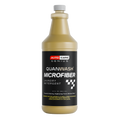
Quan Wash Microfiber Laundry Detergent — $21.99
Concentrated microfiber detergent that lifts embedded wax, sealant, and compound residue without clogging the fibers — 1–2 oz per load, 2–3 oz for compound or wax towels. Warm water, no fabric softeners or bleach, tumble dry on low.
Shop NowWhat Ceramic Spray Costs Per Ounce
Here's the cost math. At today’s list price, a 32 oz bottle of Quan Armor works out to about $0.75 per ounce. We quote per ounce rather than per car on purpose: cost-per-car depends on vehicle size, trigger discipline, and how many coats you lay down, and we have not measured it. If you would rather see the whole shelf first, the ceramic coatings collection is the full range.
A ceramic spray is the fast, forgiving route. Want protection measured in years? Different job, different prep chain: the CQuartz install guide walks that one. Shopping rather than applying? Our 2026 ceramic coating comparison lays the options side by side.
Frequently Asked Questions
How long does ceramic spray coating last?
In our experience, weeks to a few months, depending on washes, weather, and prep. A garaged car washed gently with a pH-neutral shampoo sits at the top of that range; a street-parked car in Florida sun washed with dish soap sits at the bottom. Reapply when water stops beading rather than on a calendar.
How do you use ceramic spray coating on a car?
Wash with a pH-neutral shampoo and dry the car completely, then move it into shade and check that the panels are cool to the back of your hand. Mist the product onto a folded microfiber towel, spread half a panel at a time, and cross-hatch so you do not leave thin spots. Buff immediately with a second dry towel, check the panel from a low angle, and keep the car dry overnight.
How do you apply ceramic spray on a car without streaks?
Three things cause almost every streak: too much product, a loaded buffing towel, and buffing too late. Mist two or three times onto the towel rather than onto the paint, move to a fresh towel face every panel, and buff while the residue is still fresh. If a streak has already set, rebuff dry with a clean face first — that clears most of them.
Can you apply ceramic spray over wax?
It bonds to the wax rather than to the clear coat, so it lasts only as long as the wax underneath it. Strip the wax first.
Can you use ceramic spray over ceramic coating?
Yes — a healthy coating that still beads takes a topper happily. One that is failing unevenly does not; the spray hides the problem instead of fixing it.
Can you spray ceramic coating on a windshield?
Keep it out of the wiper swept area — a hydrophobic layer under a blade judders and smears. Use a proper glass cleaner there instead.
Can you use ceramic spray on alloy wheels?
Wheel faces are a sensible place for one. Check your product’s label for wheel use, work on a cool, dry wheel, and keep it off rotors, pads, and tread.
How many coats of ceramic spray should you apply?
One properly levelled coat beats two rushed ones. If you want a second, let the first reach touch-dry — going wet-on-wet just re-dissolves the first.
What temperature should you apply ceramic coating at?
Go by the panel rather than by the air. Touch the panel briefly with the back of your hand; if you cannot comfortably hold it there, it is too hot to seal.
Related Reading
- Ceramic Spray Coating vs Professional Ceramic Coating — which one you actually need
- How to Apply a Ceramic Coating at Home: The Complete CarPro CQuartz Guide
- Best Ceramic Coatings for Cars 2026 — compared side by side
- Best Car Wash Soap for Ceramic-Coated Cars
- CarPro Reload 2.0 vs HydrO2 Foam — what an SiO2 sealant actually is
- How to Wash Microfiber Towels (Without Ruining Them)
- Waterless vs Rinseless vs Traditional Car Wash: Which One, and When
Lay Down Your First Layer
Quan Armor ceramic spray in the 32 oz bottle, shipped from our Orlando shop.
Shop Quan →