How to Remove Scratches From Car Paint (and When You Can't)
Most scratches you see on a car are in the clear coat, the thin, clear layer over the color. Those can usually be polished out. A compound takes the clear coat down a tiny amount around the scratch until its edges stop catching the light.
Deeper scratches are a different job. If a scratch goes through the clear coat into the color, the primer or the metal, polishing can make it look better but can't fill it. Here's how to tell the difference, how to remove the ones you can, by hand or by machine, and what to use.
Quick Answer
To remove a scratch from car paint, wash and decontaminate the area, then check it with your fingernail. If your nail doesn't catch, polish it out with a compound like CarPro Fixer, by hand or on a dual-action polisher. Wipe off the residue, inspect it, then protect the paint. If you can see primer or bare metal, it needs touch-up paint, not polish.
Can This Scratch Be Polished Out?
Run a fingernail gently across the scratch. It's a rough test, not a measurement, but it sorts most scratches fast.
| What you see | What it likely means | What to do |
|---|---|---|
| You can't feel it with a fingernail | A light scratch in the clear coat | Polish it by hand or with a dual-action polisher |
| Your nail catches a little | A deeper clear-coat scratch | Machine polish with a compound. It may improve rather than disappear |
| Primer (often gray or white) or bare metal at the bottom of the groove | Through the paint | Touch-up paint or a body shop. Polish can't fill it. A light clear-coat scratch can look white too, so check it with your nail |
| A mark sitting on top of the paint | Often rubber transfer or a scuff, not a scratch | Try a residue remover first. Symplex lists rubber transfer for BondLift. Test a hidden spot, and take care on fresh or matte paint, wraps and PPF |
Every pass of compound removes a little clear coat, and it doesn't grow back. Start with the gentlest product and pad that works, and stop when the scratch is gone or stops improving.
What You'll Need
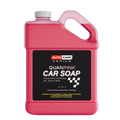
- A car shampoo: Quan Pink.
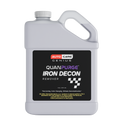
- An iron remover to decontaminate: Quan Purge.
- A compound: CarPro Fixer for most scratches, CarPro UltraCut or ClearCut for deeper ones.
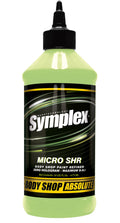
- A finishing polish: Symplex Micro SHR, or CarPro Reflect.
- Pads: Symplex Euro Foam pads for a machine, or a foam applicator by hand.
- A dual-action polisher for anything bigger than a small spot. Our DA polisher guide covers how to use one.
- An inspection spray: Symplex Look See Control.
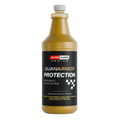
- Protection: Quan Armor.
- A stack of clean microfiber towels.
Step 1: Get the Paint Clean
Polishing dirty paint grinds the dirt in. Wash the car with Quan Pink, at 5 oz to 5 gallons of water, then decontaminate. Quan Purge is our iron remover. It's made to remove embedded brake dust, rail dust, iron deposits and fallout from paint, wheels and glass, which is exactly what you want gone before you polish. Shake it well, spray it on a wet, cool surface out of direct sun, let it dwell 2–3 minutes without letting it dry, agitate if needed and rinse thoroughly. Wear gloves and eye protection. If the paint still feels rough after that, clay it.

Decon Before You Polish · pH 7.5–8
Quan Purge Iron & Decon Remover from $24.99
Reactive gel iron remover for paint, wheels and glass. Turns purple as it breaks down iron. Spray on a wet, cool surface, dwell 2–3 minutes, rinse. 32 oz and gallon.
Shop NowStep 2: Inspect and Test
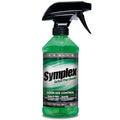
Wipe the panel with Look See Control. It's an alcohol-based inspection spray that removes dust, polishing oils and compound residue so you can see the paint's true condition. Use strong light and look at the scratch from a few angles.
Then pick a small test spot and start gentle. Try Fixer first, and only step up to a heavier compound if Fixer isn't getting there.

Inspection Wipe · Alcohol-Based
Symplex Look See Control Prep from $14.99
Spray-and-wipe inspection cleaner that removes dust, polishing oils and compound residue to show the true paint condition. Pint, quart, gallon and 5-gallon pail.
Shop NowStep 3: Remove the Scratch
By hand, for small, light scratches
For a small, light scratch, you can do this by hand. CarPro calls Fixer "a great hand polish" and recommends it for hand polishing hard-to-reach areas. Put a few drops on a foam applicator and work it into a small area with firm, overlapping passes in two directions. Wipe it off and check. Repeat while it's still improving.
With a dual-action polisher
For anything bigger, a dual-action polisher is faster and more even. These steps are adapted from CarPro's directions for Fixer, with Look See Control as the inspection wipe.

Our DIY Pick · By Hand, DA or Rotary
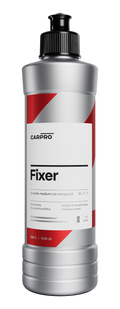
CarPro Fixer Medium Cut Compound from $13.99
One-step compound and polish. Removes 1500-grit sanding marks, scratches, marring, haze and swirl marks, with no durable fillers. 250 ml. Also in 500 ml and 1 L.
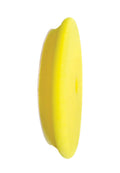
Shop NowSymplex builds its Euro Foam pads for dual-action, forced-rotation and rotary polishers. The yellow medium-cut pad suits a medium-cut compound like Fixer. Step up to the blue Xtra Cut pad when you need more cut.

For DA, Forced Rotation & Rotary
Symplex Yellow Euro Foam Medium Cut Pad from $11.15
Medium-cut foam polishing pad for dual-action, forced-rotation and rotary polishers. 3.1, 5.1 and 6.1 inch.
Shop NowDeeper scratches: step up the cut
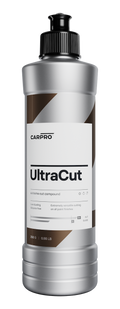
If Fixer isn't getting there, step up. UltraCut is CarPro's extreme-cut compound. It was designed for rotary use, but CarPro says it works with dual-action machines too. ClearCut is another heavy cutter, and CarPro says it's compatible with both. CarPro rates both for removing P1200-grit sanding marks and up. Heavy compounds can leave some haze, so plan on a finishing step.

Heavy Cut · Rotary or DA
CarPro UltraCut Extreme Cut Compound from $19.99
Extreme-cut compound with fully diminishing abrasives and extremely low dust. Rotary or dual-action. 250 ml. Also in 1 L and gallon.
Shop NowStep 4: Finish the Paint
Compounding can leave a light haze, and dark paint shows it most. A finishing polish takes it out. Symplex Micro SHR is a body shop paint refiner made to remove compounding haze, holograms and light swirl marks, and Symplex says it works on both rotary and dual-action polishers. On a DA, Symplex suggests speed 3–5 with a soft foam finishing pad and 3–4 pea-sized drops.
CarPro Reflect is the other option. CarPro rates it for dual-action, rotary or hand use, and says it removes holograms and light wash marring.

Finishing Polish · Rotary or DA
Symplex Micro SHR Body Shop Paint Refiner from $18.63
Removes compounding haze, holograms and light swirl marks, with no silicones, waxes or fillers. DA speed 3–5 on a soft foam pad. Pint, quart and gallon.
Shop NowStep 5: Protect It
Polishing takes off any wax or sealant along with that bit of clear coat, so the paint is bare when you're done. Wipe the panel with Look See Control, then seal it.
Quan Armor is our ceramic spray. It bonds directly to the clear coat and leaves an ultra-slick, hydrophobic shield that repels water, dirt and UV rays. Shake it well. On a clean, dry panel that's cool to the touch and out of direct sun, mist a 3x3 ft section, spread it right away with a microfiber, then flip to a dry side and buff. Give it 4–6 hours before it gets wet, and wear gloves and eye protection while you work.

Protect It · Ceramic Spray
Quan Armor Protection Ceramic Shielding $23.99
Professional-grade, user-friendly ceramic spray that bonds directly to the clear coat. Ultra-slick and hydrophobic. Allow 4–6 hours to cure. 32 oz.
Shop NowUsing a Rotary? Symplex Has a Numbered Ladder
Running a rotary in a shop? Symplex optimizes its X1 body shop compounds for rotary polishers and numbers them by cut:
- Turbo X1 Cut 7: medium sanding scratches, finishing down to a very high gloss.
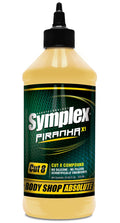
- Piranha X1 Cut 8: medium to moderate sanding scratches, as a true one-step that finishes to high gloss.
- Nitro X1 Cut 9: moderate to heavy sanding scratches, with strong cut and refined clarity.
All three are trim-safe and low-dust, and Symplex suggests following with Micro SHR when you want a perfect finish. Our Symplex compound guide compares them side by side.

Rotary · Cut 8 One-Step
Symplex Piranha X1 Cut 8 Body Shop Compound from $20.08
True one-step rotary compound for medium to moderate sanding scratches, finishing to high gloss. Trim-safe, low dust. Pint, quart and gallon.
Shop NowPro Tip
Work in the shade on a cool panel. Symplex's directions for its Rhino compounds say to avoid direct sunlight, and in Florida a dark hood in the sun gets too hot to polish properly. Early morning or a garage works best.
What Not to Do
- Don't polish dirty paint. Wash and decontaminate first.
- Don't start with your heaviest compound. Start gentle and step up only if you need to.
- Don't keep grinding at one deep scratch. If it stops improving, stop. Clear coat doesn't grow back.
- Don't polish a hot panel or work in direct sun.
- Don't skip protection. Polished paint is bare paint.
Frequently Asked Questions
Can you remove scratches from car paint yourself?
Light ones, yes. If the scratch is in the clear coat and your fingernail doesn't catch, a compound like CarPro Fixer can polish it out by hand or with a dual-action polisher. Scratches that show primer or bare metal need paint.
How do you know if a scratch is too deep to polish out?
If your fingernail catches in it, it's deep, and polishing may only improve it. If you can see primer or bare metal at the bottom, it's through the paint, and polish can't fix that.
Can you remove scratches by hand?
Small, light ones, yes. CarPro calls Fixer a great hand polish. Work a few drops into a small area with a foam applicator, wipe it off and check, and repeat while it's improving. For anything bigger, a dual-action polisher is faster and more even.
Does toothpaste remove scratches from a car?
We wouldn't use it. Toothpaste is made for teeth, not clear coat, and it doesn't come with directions for paint. A compound like CarPro Fixer is made for automotive paint and tells you exactly how to use it.
Does WD-40 remove car scratches?
WD-40's own list of 2,000+ uses includes "Buffs out scuff marks on bumpers" and "Removes paint rub caused by other vehicles." Those are marks on top of the paint, not scratches in it. WD-40 Company also says those uses came from end users and haven't been tested by the company. A real scratch needs polishing.
Should you use a compound or a polish first?
Compound first, then polish. The compound cuts the scratch out, and the polish takes out the haze the compound leaves. CarPro Fixer is a one-step compound and polish, so a light scratch may only need that.
What should you put on after removing scratches?
Protection. Polishing leaves the paint bare. Wipe the area with Symplex Look See Control, then seal it with Quan Armor, which bonds directly to the clear coat.
Related Reading
Start Gentle. Finish Clean.
CarPro Fixer for the scratch, Symplex Micro SHR to finish it and Quan Armor to protect it.
Shop CarPro Fixer →