Best Dual Action Polisher for Beginners (2026)
If you have ever run your hand over a freshly washed hood in direct sun and seen a spiderweb of light swirls staring back at you, you already understand why a dual action (DA) polisher is the single most transformative tool a home detailer can own. A good machine removes swirl marks, light scratches, water spots, and oxidation, then leaves paint with the kind of wet, mirror-like gloss that makes a car look genuinely new. The problem is that most buying guides are written for people who already know what they are doing. This one is not.
This is an honest, working-detailer's roundup of the best dual action polisher for beginners in 2026. We stock every machine on this list, we use them on customer cars in our Kissimmee shop, and we are going to tell you plainly which one a first-timer should buy, which one to grow into, and which ones are overkill for most people. No hype, no fake specs.
The short answer
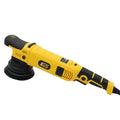
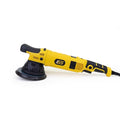
For the vast majority of beginners, the best machine is the Golden State DA Polisher — 15mm Throw, 1000W, 5-inch Backing Plate. The 15mm short throw gives you the control that keeps you out of trouble on edges and body lines, the 1000-watt motor has plenty of muscle to actually cut and remove defects, and because we took these on consignment, the value is hard to beat. If you drive a larger vehicle, an SUV, a truck, or you simply want to finish big flat panels faster, step up to the Golden State DA Polisher — 21mm Throw, 6-inch Backing Plate. Everything else on this page is context to help you feel confident about that decision.
What a dual action polisher actually does (and why it is safe)
A dual action polisher spins and oscillates at the same time. The backing plate rotates while also wobbling on an offset, which means the pad's motion is a little random rather than a fixed high-speed spin. That randomness is the whole point: it spreads heat and abrasion across the surface instead of concentrating it in one spot. A rotary buffer, by contrast, spins on a fixed axis and can burn through paint in seconds if you get lazy. That is why DA polishers are the beginner-friendly, forgiving choice, and why we recommend them for anyone who has never corrected paint before.
You pair the machine with a foam or microfiber pad and a liquid compound or polish. The compound contains abrasives that level a thin layer of clear coat, taking the defect down to the bottom of the scratch so it disappears. Coarser products (compounds) cut faster; finer products (polishes and glazes) refine the finish to a high gloss. That is the entire concept.
Understanding "throw" — the one spec beginners must get right
Throw (also called orbit or stroke) is the diameter of the little circle the pad travels as it oscillates. It is the most important number on the box, and it is where most people get confused. Here is the plain-English version:
- 8mm throw (mini / short-throw): A small orbit. These are almost always the smaller 3-inch "mini" polishers built for tight areas: mirror caps, pillars, bumpers, door handles, motorcycle tanks. Great as a second machine, not ideal as your only machine because it is slow on big panels.
- 15mm throw (medium / short-throw full size): The sweet spot for beginners. It has enough orbit to correct efficiently, but the shorter stroke is more controllable and less prone to "hopping" or walking off an edge. It is easier to keep flat and easier to steer. This is why the 15mm Golden State is our top beginner pick.
- 21mm throw (long-throw): A big orbit that covers ground fast and cuts aggressively on large, flat surfaces. It shines on hoods, roofs, truck beds, and van panels. The trade-off is that a longer throw can feel like more machine in your hands and is a little less nimble around tight curves. It is fantastic once you have the basics down, or right away if you are mainly doing bigger vehicles.
The 2026 beginner DA polisher comparison
Here is how the machines we carry stack up. We have grouped them so you can see where the Golden State pair sits against the alternatives and the premium options.
| Polisher | Throw | Backing plate | Best for | Price tier |
|---|---|---|---|---|
| Golden State DA — 15mm (our #1 for beginners) | 15mm | 5-inch | First-time detailers, cars & sedans, edges and body lines, best control-to-value ratio | $ Value |
| Golden State DA — 21mm | 21mm | 6-inch | Larger vehicles, SUVs & trucks, faster correction on big flat panels | $ Value |
| Max Shine M8S V2 | 8mm | 3-inch (mini) | Tight areas, spot correction, second machine | $$ Mid |
| Max Shine MB8 (brushless) | 8mm | 3-inch (mini) | Precision work, panels & trim, longer sessions | $$ Mid |
| Max Shine MB15 (brushless) | 15mm | 5-inch | All-around correction with a smooth brushless motor | $$ Mid |
| Max Shine MB21 (brushless) | 21mm | 6-inch | Fast correction on large vehicles, brushless refinement | $$ Mid |
| Rupes LH19 / Nano iBrid / HLR75 | Varies (mini to long-throw) | Varies | Pros and enthusiasts who want premium ergonomics & finish | $$$ Premium |
Browse the full lineup any time on our new DA polishers collection.
Our picks, ranked and explained
1. Best for beginners: Golden State DA Polisher — 15mm Throw, 1000W, 5-inch Backing Plate
This is the machine we hand to a nervous first-timer, and it is the one that consistently turns them into a confident one. The 15mm Golden State hits the beginner trifecta: a controllable short throw, a 1000-watt motor with genuine cutting power, and a price that does not punish you for learning. The 5-inch backing plate takes standard 5.5-inch and 6-inch pads, so consumables are easy to find and cheap to replace.
Why it wins for beginners: the 15mm stroke is forgiving. It is far less likely to hop across a panel or drag itself off a raised body line than a long-throw machine, which means fewer white-knuckle moments and a much lower chance of striking through paint on an edge. You will spend your first session actually correcting paint instead of fighting the tool. For a sedan, coupe, or daily driver, this is all the machine most people will ever need.
2. Best for larger vehicles and faster correction: Golden State DA Polisher — 21mm Throw, 6-inch Backing Plate
If your project is a big SUV, a pickup, a van, or you just have a lot of square footage to cover, the 21mm Golden State is the smarter buy. The longer 21mm throw and 6-inch backing plate sweep more area per pass and cut aggressively on large flat panels, so a full correction goes noticeably faster. It asks for a slightly more deliberate hand around tight curves and edges, which is why we rank it just behind the 15mm for absolute first-timers, but plenty of beginners start here with no trouble, especially if their vehicle is big. If you already know you will graduate to trucks and SUVs, buy this and skip the upgrade later.
3. Best mini / precision option: Max Shine M8S V2 and MB8
Full-size machines are great on panels but clumsy on mirror caps, A-pillars, tight bumpers, and around emblems. That is where an 8mm mini earns its keep. The Max Shine M8S V2 and the brushless MB8 run a 3-inch pad and let you correct small, curved, and hard-to-reach areas without risk. Think of these as a complement to a full-size Golden State, not a replacement. Most enthusiasts eventually own one full-size and one mini.
4. Brushless all-rounders: Max Shine MB15 and MB21
If you want a brushless motor (smoother, cooler-running, longer service life) in a 15mm or 21mm platform, the Max Shine MB15 and MB21 are solid mid-tier choices that mirror the throw logic above. They cost more than the Golden State machines, and for a beginner the extra spend is not strictly necessary, but they are honest, capable tools and worth knowing about if refinement matters to you.
5. Premium: Rupes LH19, Nano iBrid, and HLR75
Rupes builds beautiful, ergonomic machines with superb balance and finishing ability, and pros love them. But a beginner does not need to spend premium money to get excellent results. Buy a Golden State, learn the craft, and if you fall in love with detailing, a Rupes will still be there when you are ready. Buying the most expensive tool first does not make you better at using it.
What beginners actually need (beyond the machine)
A polisher is only one third of the system. To correct paint you also need pads and a compound/polish, and pairing them correctly matters more than the brand on the tool. Here is the simple, beginner-proof kit we recommend building around either Golden State machine:
- Pads: Our Golden State Pads come in 5-inch (for the full-size 15mm and 21mm) and 3-inch (for mini work and tight areas). Start with a cutting/medium foam pad for defect removal and a soft finishing pad for the final gloss pass. Buy at least two of each so you can swap a saturated pad for a fresh one mid-job.
- Cutting compound: The Golden State 4-1 Fast Cutting Compound is your workhorse for removing swirls, light scratches, and oxidation. Paired with a medium foam pad it does the heavy lifting.
- Glaze / finishing polish: Follow up with the Golden State High Gloss Glaze Compound (16 oz) on a soft pad to refine the finish and pull maximum gloss and depth out of the paint.
- IPA wipe-down solution: After compounding, wipe the panel with a diluted isopropyl alcohol (IPA) solution to strip away polishing oils. This reveals the true, honest result so you are not fooled by oils temporarily hiding remaining swirls.
- Good lighting: A swirl-finder light or LED work light lets you see defects that hide under garage lighting. You cannot fix what you cannot see.
Buying the machine and the compatible pads and compounds as a system, rather than mixing random parts, is the single easiest way to guarantee a good first result. Everything above is designed to work together and is available in our DA polishers collection.
Safe technique: how to not mess up your first correction
The DA is forgiving, but forgiving is not the same as foolproof. Follow these rules and you will get a great result without damaging your paint:
- Wash and decontaminate first. Polishing over grit drags it across your clear coat. Start with a proper wash using a good car wash soap, then clay the paint so it is perfectly smooth.
- Always do a test spot. Pick one 2x2-foot section, run your pad-and-compound combo, wipe it down with IPA, and inspect. If it corrected the defects, replicate that process on the rest of the car. If not, step up to a more aggressive pad before you change anything else.
- Keep the pad flat. Hold the machine so the whole pad face contacts the paint evenly. Tilting concentrates pressure and heat on one edge and is the fastest way to burn through clear coat.
- Do not burn the edges. Body lines, ridges, and panel edges have the thinnest clear coat. Slow down there, use light pressure, and consider taping off sharp edges with painter's tape.
- Work in the shade, on cool paint. Direct Florida sun makes compound flash-dry and bake onto the surface. Polish in a shaded garage or carport with panels cool to the touch.
- Use slow, overlapping passes. Move the machine about an inch per second with roughly 50% overlap between passes. Let the machine and the abrasives do the work; do not lean on it.
- Prime the pad, then use a pea-sized top-up. Spread a few dots of compound across the pad on the first use, then add a small amount for each new section. Too much product just slings everywhere.
For a full walk-through of the process from start to finish, read our companion guide, How to Use a Dual-Action Polisher (Beginner's Guide), and if swirls are your specific enemy, see How to Remove Swirl Marks From Car Paint. Still deciding between the two Golden State machines? Our breakdown, Golden State DA Polisher: 15mm vs 21mm — Which Throw?, settles it. And when you are ready to dial in your pad-and-compound pairings, read Best Cutting Compound and Polish for Paint Correction.
Where a polisher fits in your overall detailing routine
Paint correction is one step in a bigger process. If you are brand new to the hobby, start with the fundamentals in our complete beginner's starter guide, then build outward. Once your paint is corrected and glossy, protect that work with a ceramic coating so it lasts. Our 2026 ceramic coating comparison covers the best options to lock in your results. And do not forget the details that make a corrected car pop, like clean wheels with the right brake-dust wheel cleaner and a proper dressing from our roundup of the best tire shine products of 2026.
The bottom line
If you are buying your first dual action polisher in 2026, buy the Golden State 15mm for its unbeatable balance of control, power, and value. If your daily driver is a big SUV or truck, or you want to correct large panels faster, go with the Golden State 21mm. Pair either one with Golden State pads, the 4-1 Fast Cutting Compound, and the High Gloss Glaze, follow safe technique, and you will bring back a level of gloss you did not think was possible at home.
Ready to get started? Explore the full DA polishers collection and pick the machine that fits your ride. If you are local to Kissimmee or Orlando, stop by the shop and we will help you match the right polisher, pads, and compound in person.
Frequently Asked Questions
What is the best dual action polisher for beginners in 2026?
For most beginners, the Golden State DA Polisher with a 15mm throw, 1000W motor, and 5-inch backing plate is the best pick. The short 15mm throw gives you control on edges and body lines while the 1000-watt motor still has enough power to remove swirls and light scratches, all at a strong value price. If you mainly work on larger vehicles like SUVs and trucks, step up to the Golden State 21mm for faster correction on big panels.
What does 'throw' mean on a DA polisher, and which should a beginner choose?
Throw (or orbit) is the diameter of the circle the pad travels as it oscillates. An 8mm throw is a small mini-polisher for tight areas, a 15mm throw is the controllable all-rounder that beginners should choose, and a 21mm throw is a long-throw machine that cuts faster on large flat panels. As a rule: shorter throw means more control, longer throw means more speed. Beginners almost always benefit from the control of a 15mm.
Is a dual action polisher safe for a first-timer?
Yes. A DA polisher both spins and oscillates on an offset, which spreads heat and abrasion instead of concentrating it in one spot like a rotary buffer. That makes it very forgiving. To stay safe, always do a test spot first, keep the pad flat, use light pressure on edges and body lines, work in the shade on cool paint, and do an IPA wipe-down to check your results honestly.
What pads and compounds do I need with a Golden State polisher?
Build a simple system: Golden State foam pads in 5-inch for the full-size 15mm and 21mm machines (and 3-inch for tight areas), the Golden State 4-1 Fast Cutting Compound for removing defects, and the Golden State High Gloss Glaze Compound (16 oz) on a soft pad for the final gloss pass. Buying pads and compounds designed to work together is the easiest way to guarantee a good first result.
Do I need an expensive Rupes to get good results?
No. Rupes machines are excellent and pros love them, but they are premium-priced and unnecessary for a beginner. A Golden State 15mm or 21mm paired with the right pads and compound will deliver excellent correction and gloss. Learn the craft on a value machine first; you can always upgrade to a premium polisher later if you fall in love with detailing.
Ready to Buy Your First Polisher?
Grab the Golden State 15mm or 21mm, pair it with pads and compound, and bring back a gloss you did not think was possible at home.
Shop DA Polishers →