Wheels, Tires and Trim: The Symplex Exterior Finishing Guide
Quick Answer
Work outside in and clean before you dress. Strip the wheel first with a non-acid cleaner, add an iron remover if brake dust is embedded rather than sitting on the surface, then dress the tire and treat the trim last so nothing you spray lands on a surface you still have to clean. Symplex covers each step: Ultimate Wheel & Tire Cleaner for the strip, Iron Wheel Remover for embedded fallout, Glossier or Extreme APD on the tire, and Plasti-K Xtreme or Ceramic Trim SiO2 on the plastic.
Clean before you dress, and work outside in
The corners of a car are the first thing anyone looks at and the last thing most details get to. That's backwards, and it's also why so many jobs end with overspray on a clean panel.
Wheels and tires come first. They're the dirtiest part of the car and everything you do to them throws product around. Trim goes last, after the paint is finished, because trim dressing on paint is a nuisance and trim dressing under a sealant is a failure.
Step one: strip the wheel
A lot of shops reach for an acid wheel cleaner because it shifts baked-on brake dust fast. Then they live with the consequences — etched finishes, damaged trim, and hydrofluoric acid sitting in a spray bottle on the shelf.
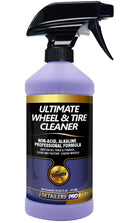
Symplex Ultimate Wheel & Tire Cleaner is a non-acid cleaner built on alkaline surfactant technology, so there's no hydrofluoric acid in the bottle. Symplex says it dissolves baked-on brake dust, road grime, oily residue, tire browning and old dressing buildup. It lists it for painted, powder-coated, clear-coated, chrome, aluminum and factory-finished wheels, plus all tire types, white walls included. It's a concentrate: use it straight or at 1:1 for heavy contamination, and dilute up to 1:3 for routine cleaning.

Non-acid · Straight to 1:3
Symplex Ultimate Wheel & Tire Cleaner — $14.95
Non-acid alkaline wheel and tire cleaner. Cleans brake dust off the wheel and browning off the sidewall in the same step. Pint through 5 gallon pail.
Shop NowPro Tip
Work on cool wheels. Spray, agitate with a soft brush, give it 1–2 minutes if it needs it, then rinse with a strong stream. Don't let it dry.
When the brake dust is in the finish, not on it
There's a point where washing stops working. Iron particles from the pads embed themselves in the finish, and no amount of soap and agitation lifts them out because they aren't sitting on top any more.
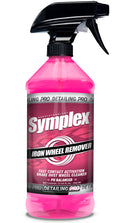
That's what Iron Wheel Remover is for. It dissolves embedded iron and metallic brake dust chemically, activating fast on contact, and it changes color as it reacts, so you can see it working. Symplex says it's safe on all car surfaces and won't deteriorate clear coats, and the formula is low odor. Follow the label for dwell and rinse times.

Color-change decon
Symplex Iron Wheel Remover — from $63.58
Dissolves iron and metallic contamination and brake dust, with fast contact activation and a visible color change. Symplex rates it safe on all car surfaces. Quart, gallon, 5 gallon pail.
Shop NowYou don't need it every wash. Use it when the wheels still feel gritty after cleaning, or as a decontamination step before you correct or coat paint.
Step two: dress the tire
Solvent tire shines can look great in the bay and then throw a stripe of product down the side of the car on the first drive. Both Symplex tire dressings we carry are water-based, and they solve different problems.
| Product | Covers | Dilution | Finish control | Starting price |
|---|---|---|---|---|
| Glossier Tire Shine | Tire sidewalls, rubber | Ready to use | High gloss; wipe for satin | $14.99 |
| Extreme APD | Tires, trim, rubber, vinyl, plastic | Straight to 1:10 | Straight for high gloss, 1:1 for medium, up to 1:10 for OEM satin | $20.99 |
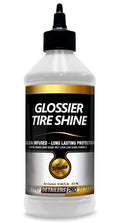
Glossier is the dedicated tire product: a water-based, low-sling dressing that goes on with a foam or microfiber applicator and dries to a high-gloss, wet look. For satin, wipe it with a clean microfiber a few minutes after applying. For more gloss and durability, add a second coat once the first is dry to the touch. Let it dry 10–20 minutes before driving so it doesn't sling. Symplex rates it for several weeks, and it runs from a pint up to a 5 gallon pail.

Low sling
Symplex Glossier Tire Shine Water-Based — $14.99
Water-based, low-sling tire dressing with a high-gloss, wet-look finish. Wipe it down for satin. Pint through 5 gallon pail.
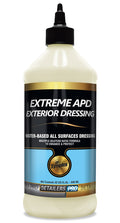
Shop NowExtreme APD is the one-bottle answer instead. It's a concentrated, water-based all-purpose dressing for vinyl, rubber and plastic, inside and out, and Symplex lists it for exterior trim, bumpers, moldings and tires. The dilution sets the gloss: straight for high gloss, 1:1 for medium, and 1:2 up to 1:10 for a low-gloss OEM finish. If you'd rather carry one bottle than three, this is it.

One bottle, three jobs
Symplex Extreme APD Exterior Dressing — $20.99
Water-based dressing for tires, trim, rubber, vinyl and plastic, inside and out. Straight for high gloss, 1:1 for medium, up to 1:10 for an OEM finish. Quart, gallon, 5 gallon pail.
Shop NowPro Tip
Apply tire dressing with a foam applicator, not a trigger spray, if the wheel is already clean. Spraying at the tire is how dressing ends up on the wheel face you just spent five minutes stripping.
Step three: bring the trim back
Faded gray plastic makes a car look older than it is, and customers notice it. Symplex has two dedicated answers: a dressing, and an SiO2 treatment that Symplex says lasts longer than conventional trim dressings.
| Product | Type | What it does | Starting price |
|---|---|---|---|
| Plasti-K Xtreme Exterior | Dressing | Revives faded plastic to an OEM satin; results last weeks | $18.74 |
| Ceramic Trim SiO2 | SiO2 treatment | Bonds to exterior plastic; weeks of water beading; resists light washing and UV | $21.54 |
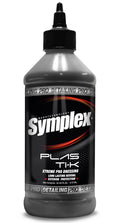
Plasti-K Xtreme Exterior is Symplex's pro trim dressing, built for speed and visible results. Its reactive amino-functional polymers bond to the surface to revive faded, chalky plastic to a clean OEM satin, with UV blockers against fading and cracking. It leaves a non-sticky finish that's dry to the touch. Symplex says the results last for weeks; keep water off it for 10 minutes after applying.

Dressing · OEM satin
Symplex Plasti-K Xtreme Exterior Pro Dressing — $18.74
Pro exterior trim dressing for faded plastic, bumpers, weather-strips, rubber and textured plastics. Dries to a non-greasy OEM satin.
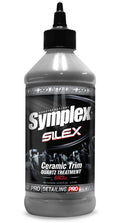
Shop NowCeramic Trim SiO2 goes further. It uses water-based SiO2 cross-link chemistry to form a reactive barrier that bonds to exterior plastic, with weeks of water beading, an OEM satin finish and resistance to light washing and UV. Symplex pitches it as longer-lasting than conventional trim dressings and a fit for ceramic coating maintenance. It goes on the same way: apply, spread, let it cure a few minutes, then lightly buff.

SiO2 treatment
Symplex Silex Ceramic Trim SiO2 Quartz Treatment — $21.54
Water-based SiO2 treatment that bonds to exterior plastic, unpainted moldings and rubberized plastic. OEM satin finish that resists light washing and UV.
Shop NowDressing or coating: which does your trim need?
Use a dressing when the trim is in reasonable shape and the car gets regular attention. It costs less by the bottle and is easy to top up whenever you wash.
Use the SiO2 treatment when you want protection that outlasts a conventional dressing, or when you're already offering ceramic coating maintenance. Either way, both products go on clean, dry plastic.
The full sequence
The bottom line
If you're buying one product off this page, make it the Ultimate Wheel & Tire Cleaner. A non-acid cleaner that Symplex says dissolves baked-on brake dust is what keeps hydrofluoric acid off your shelf.
After that it depends how you work. Running volume through a shop? Extreme APD covers tires and trim from one bottle, and the dilution sets the gloss. Chasing the best finish on each car? Glossier on the tires and Plasti-K Xtreme on the trim, with Ceramic Trim SiO2 when you want protection that outlasts a dressing.
Frequently Asked Questions
Is a non-acid wheel cleaner strong enough for baked-on brake dust?
Symplex says Ultimate Wheel & Tire Cleaner dissolves baked-on brake dust with alkaline surfactants, without the corrosive effects of acids. For heavy contamination, use it straight or at 1:1 and agitate with a brush. For contamination that's embedded in the finish rather than sitting on it, add a dedicated iron remover.
What's the difference between a wheel cleaner and an iron remover?
A wheel cleaner lifts dirt, brake dust and road film off the surface. An iron remover dissolves metallic particles that have embedded themselves in the finish, which is why it color-changes as it reacts. Clean first, then decontaminate only if the surface still feels gritty afterwards.
Why does water-based matter for tire shine?
Sling. Solvent dressings can look impressive in the bay and then throw product down the side of the car on the first drive. Glossier is a water-based, low-sling formula, and Symplex says it conditions rubber without harsh solvents. Let it dry 10–20 minutes before driving so it stays on the tire.
Can I use Extreme APD on tires and trim both?
Yes. Symplex lists it for exterior trim, bumpers, moldings and tires, plus interior vinyl, rubber and plastic. Use it straight for high gloss, 1:1 for medium gloss, or 1:2 up to 1:10 for a low-gloss OEM look.
Should I dress trim or coat it?
Dress it with Plasti-K Xtreme if the car gets regular attention; it's easy to top up. Use Ceramic Trim SiO2 when you want longer-lasting protection than a conventional dressing: it bonds to the plastic and resists light washing and UV.
What order should wheels, tires and trim go in?
Wheels and tires first, because they're the dirtiest and everything you do to them sprays around. Then the full paint process. Trim goes last, on clean dry plastic, once nothing else is going to land on it.
Related Reading
Finish the Corners Properly
Symplex wheel cleaners, tire dressings and trim treatments — shipped from our Orlando shop, or come see us in Kissimmee.
Shop Now →