Why Are My Tires Turning Brown? How to Get Them Black Again
You wash the car, dress the tires, and a week later the sidewalls look dusty and brown again. It's one of the most common tire questions in detailing — and the fix has less to do with scrubbing harder than with understanding what that brown film actually is.
Quick Answer
Tires turn brown because of tire blooming: protective chemicals built into the rubber (antiozonants and waxes) work their way to the surface and oxidize into a brown film. Old tire dressing and road grime make it look worse. To get tires black again, scrub the sidewalls with an acid-free tire cleaner like Quan Brown and a stiff tire brush, rinse, and repeat until the foam stops coming off brown — then dress a clean, dry tire.
What Actually Turns Your Tires Brown
Tire manufacturers blend protective chemicals into the rubber compound to keep it from cracking. The main one is an antiozonant — most commonly a compound called 6PPD — along with waxes. Ozone and oxygen in the air slowly attack rubber, and these additives are there to take the hit instead.
Over time, those additives migrate ("bloom") to the surface, where they react with ozone and oxygen and form a protective film. Flexing while you drive helps push them out — and on a car that sits parked, the film builds up because nothing wears it off. The byproduct of that reaction is brown. In other words, a bit of brown on the sidewall is partly a sign the tire's built-in protection is doing its job.
Three things make it look worse:
- Old tire dressing. Dressing applied over a dirty or bloomed tire traps that film underneath. Layer after layer, it turns blotchy and brown.
- Road grime and brake dust. Tires sit right next to your brakes and the road. That film bonds to the sidewall between washes.
- Sun and heat. The bloom is an oxidation reaction, and constant sun speeds up how quickly tires dull — something anyone parking outside in Florida sees fast.
That's why a quick rinse or a pass with car soap rarely fixes it. The brown isn't loose dirt sitting on top — it's a bonded film that needs a dedicated cleaner and some agitation to lift.
Pro Tip
Watch the foam. When you scrub a browned tire with cleaner, the suds turn brown as they pull the bloom and old dressing out of the rubber. Keep cleaning until the foam stays white — that's how you know the tire is actually clean and ready for dressing.
Why Tire Shine Over Brown Tires Makes It Worse
The instinct is to hit brown tires with more tire shine. It looks great for a day, then goes patchy — and the brown shows through again quickly. Dressing doesn't remove bloom; it seals whatever is on the surface under a glossy layer. The more coats you stack on an unclean tire, the more buildup you'll eventually have to strip.
The fix is always the same order: clean first, dress second. A properly cleaned tire also holds dressing longer, so you end up using less product.
Why an Acid-Free Cleaner Makes Sense Here
You don't need acid to remove tire browning — and since your tire sits millimeters from your wheel, what you spray on the sidewall often ends up on the wheel face too. Acid-based cleaners are the right tool for some heavy-duty wheel jobs, but they have to be used carefully on many wheel finishes. Our breakdown of acid vs. acid-free wheel cleaners covers when each makes sense.
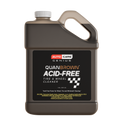
For routine tire cleaning, an acid-free formula is the simpler choice: it lifts browning and grime from the rubber, and you can clean compatible wheels in the same step. Quan Brown was built for exactly this — its directions list it for tire browning, brake dust, and road grime on tires, whitewalls, and most factory painted/clear-coated and chrome wheels.

Recommended · Tire & Wheel Cleaner
Quan Brown — Acid-Free Tire & Wheel Cleaner
A concentrated, acid-free cleaner made to dissolve brake dust, road grime, and stubborn tire browning. Dilute 4:1 (4 parts water to 1 part product), so one bottle makes a lot of ready-to-use cleaner. Also used on whitewalls and engine bays. Note: not for uncoated polished aluminum or anodized wheels.
Shop NowHow to Clean Brown Tires: Step by Step
Set up in the shade with a spray bottle, a stiff tire brush, a separate soft wheel brush if you're doing the wheels too, and a hose or pressure washer.
Pro Tip
Keep your tire brush and wheel brush separate. A stiff tire brush is great on rubber, but its bristles can mark delicate wheel finishes — and a wheel brush that's been scrubbing tires carries grit with it.
Cleaning Brown Whitewalls and White Letters
Whitewalls and raised white lettering show browning more than anything else on a car. The process is the same as above, with a few adjustments:
- Rinse often while you scrub, so brown runoff from the black rubber doesn't re-stain the white.
- Work the white area in small sections and rinse each one before the cleaner dries.
- Skip bleach and harsh household cleaners — they can dry out the rubber.
Quan Brown is made to brighten whitewalls as part of regular cleaning. Whitewalls that have been neglected for years may need more than one session — or a stronger approach, which our acid vs. acid-free guide walks through.
How to Keep Tires From Turning Brown Again
You can't stop blooming entirely — it's built into how tires protect themselves. But you can keep it from building up into that dull, dusty look:
- Clean the tires every wash, not just the paint. A quick pass with Quan Brown and a brush keeps bloom from stacking up.
- Only dress clean, dry rubber. Dressing over bloom is what creates the blotchy brown buildup.
- Apply thin coats and wipe off the excess. Heavy coats attract dust and sling.
- Pick a finish you'll actually maintain. Our tire shine finish guide compares high-gloss, satin, and natural looks.

Recommended · Wet-Look Dressing
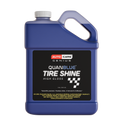
Quan Blue — Wet-Look Tire Shine
A solvent-based silicone tire shine for a deep, wet-look gloss with water-resistant durability and UV protection. Apply with a foam applicator to a clean, dry tire and let it dry fully before driving. Buff off the excess for a more satin look.
Shop Now
Recommended · Satin / Natural Finish
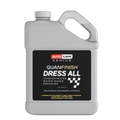
Quan Finish — Dress All Water-Based Dressing
A concentrated, water-based dressing for tires, trim, vinyl, and rubber. Dilute 50/50 with water for a natural satin look, or use it full strength for more shine. A good fit if you prefer a factory-fresh finish over high gloss.
Shop NowFrequently Asked Questions
Does brown on my tires mean they're dry rotting?
Not by itself. Brown bloom is a normal byproduct of the antiozonants protecting the rubber. Dry rot shows up as cracks in the sidewall or between the tread blocks. If you see cracking, have the tire inspected, and check its age: the last four digits of the DOT code on the sidewall show the week and year it was made. The full code is sometimes printed on only one side, often the inside, so check both.
Why do my tires turn brown after tire shine?
Usually because the dressing went on over a tire that wasn't fully clean. The bloom and grime underneath show through as the dressing wears, and new bloom keeps surfacing over time. Deep-clean the tire until the foam runs white, dry it completely, then apply a thin coat.
Can I clean my wheels with Quan Brown at the same time?
Yes, on most factory painted/clear-coated and chrome wheels — that's what it's designed for. Don't use it on uncoated polished aluminum or anodized wheels. When in doubt, test a small, hidden spot first.
How often should I clean my tires?
Every time you wash the car. Regular light cleaning takes a minute per tire and keeps browning from building up. Save the multi-round deep clean for tires that have gone brown or have months of old dressing on them.
Will car wash soap remove tire browning?
Not well. Car soap is made to be gentle on paint, and the brown film on tires is bonded to the rubber. A dedicated tire and wheel cleaner plus a stiff brush does the job much faster.
Get Your Tires Black Again
Acid-free cleaning that lifts the brown, plus a dressing that finishes the job.
Shop Wheel & Tire Care →