How to Clean an Engine Bay Safely, Step by Step
An engine bay collects oil mist, road grime and dust, and engine heat bakes it on. Cleaning it isn't hard. It just isn't a car wash. Water and electrical parts share the space, and the degreasers that work best are strong stuff.
Here's how we do it: a cool engine, the electrical parts covered, the right degreaser at the right dilution, a gentle rinse, then a dressing for the plastics. We'll also cover what to use if you can't run a hose, plus straight answers on pressure washers and WD-40.
Quick Answer
To clean an engine bay safely, start with a cool engine and cover the exposed electrical parts. Spray a degreaser like Quan Red Pure diluted 1:4, agitate with a detailing brush and rinse gently, keeping the water off the covered parts. Let it dry, then dress the plastics with Quan Finish.
What You'll Need
- A degreaser: Quan Red Pure, or Symplex Super Degreaser.
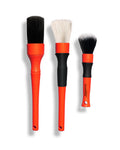
- Detailing brushes: the CarPro Detail Brush 3pc Set, which CarPro lists for engine areas.
- Plastic bags or plastic wrap, and tape, to cover electrical parts.
- A garden hose with a gentle spray setting.
- Microfiber towels for drying.
- A dressing for the plastics: Quan Finish Dress All, or CarPro PERL.
- Gloves and eye protection. Quan Red's label calls for both.
Before You Start
Start with a cool engine. Quan Red's label says to avoid hot surfaces and never let the product dry on the surface. CarPro says not to use MultiX on hot surfaces either. Degreaser dries fast on a hot engine, so after a drive, give it time to cool.
Cover the electrical parts. Symplex's Super Degreaser page says to protect electrical components during engine bay cleaning. Cover the alternator, the fuse and relay box, the air intake and any exposed connectors with plastic bags or plastic wrap, and tape the covers down. If your owner's manual says anything about washing under the hood, follow it.
Gear up. Quan Red's safety data sheet lists sodium hydroxide, and its label warns that it can cause severe skin burns and serious eye damage. Wear gloves, eye protection and long sleeves, and work outdoors or somewhere with good airflow.
Pro Tip
Take a phone photo of the engine bay before you cover anything. When you're done, check it against the photo so every bag and cover comes back off before you close the hood.
Choosing an Engine Bay Degreaser
Each of these is made for engine bay work. The difference is strength and dilution.
| Product | Engine bay mix | What the maker says to watch |
|---|---|---|
| Quan Red Pure | 1:4 for routine cleaning, full strength for tougher jobs | Can cause severe burns: gloves, eye protection, no hot surfaces, never let it dry |
| Symplex Super Degreaser | 1:20 to 1:50 | Protect electrical parts. For heavy grease at 1:5–1:10, Symplex recommends a respirator mask |
| Symplex Concentrate MPC | 1:1 for light engine bay work | pH 11–12. Rinse it, or wipe it off with a damp microfiber. Test before using on polished aluminum |
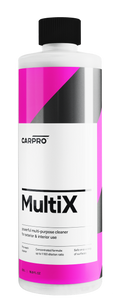
| CarPro MultiX | Undiluted to 1:20 | pH 10–11. Wear gloves. Not for anodized aluminum, hot surfaces or direct sun |
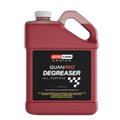
Quan Red Pure is our house all-purpose cleaner and degreaser, and its label puts degreasing engines first on its list of jobs, ahead of wheel wells, tires, seats and carpets. For routine cleaning, dilute it 1 part to 4 parts water. For tougher jobs, the label says to use it full strength. It's $11.99 for a 32 oz bottle.

Our Pick · Cleaner + Degreaser
Quan Red Pure Degreaser All Purpose $11.99
Concentrated all-purpose cleaner and degreaser for engines, wheel wells, tires, seats and carpets. 1:4 for routine cleaning, full strength for tougher jobs. 32 oz.
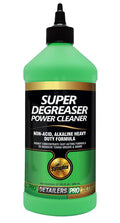
Shop NowSymplex Super Degreaser is a non-acid, alkaline degreaser, and Symplex lists engine compartments among its jobs. For an engine bay, Symplex says to mix it 1:20 to 1:50, let it dwell 1–3 minutes without drying, agitate heavy grime and rinse thoroughly. Save the 1:5–1:10 mix for heavy grease, and wear a respirator mask at that strength, as Symplex recommends.

Non-Acid · 1:20–1:50 for Engine Bays
Symplex Super Degreaser Power Cleaner from $11.99
Non-acid alkaline degreaser for engine compartments, wheels and tires, shop floors and tools. Dilutes up to 1:400 for light cleaning. Quart, gallon and 5-gallon pail.
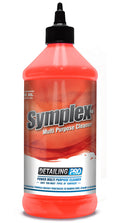
Shop NowSymplex Concentrate Multi-Purpose Cleaner is the lighter-duty option. Symplex positions it between interior-safe cleaners and heavy-duty degreasers, and rates it for light to moderate engine bay work, at 1:1 for light engine bay jobs. It's also the one here whose directions let you wipe it off with a damp microfiber instead of rinsing. More on that below.
CarPro MultiX is CarPro's all-purpose cleaner. CarPro lists the engine bay at anywhere from undiluted to 1:20, says to wear gloves and to keep it off anodized aluminum. It's $18.99 for 500 ml.
How to Clean an Engine Bay, Step by Step
How to Dress Engine Bay Plastics
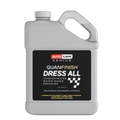
Clean plastics can still look gray and tired. Quan Finish is a concentrated, water-based silicone dressing, and its label lists engine bays along with tires, vinyl, rubber, leather and plastic. It protects against the UV rays that cause cracking, fading and peeling. It dries to the touch, and the label says it won't attract dirt or dust.
Its directions start where this guide ends: clean the surface first with an all-purpose degreaser such as Quan Red. Dilute Finish 50/50 with water for a natural sheen, or use it full strength for more shine. Apply an even layer with an applicator pad or sprayer, remove the excess and let it dry.

Dressing · Natural or High Shine
Quan Finish Dress All from $21.99
Concentrated, water-based dressing for tires, vinyl, rubber, leather, plastic and engine bays. 50/50 for a natural sheen, full strength for more shine. 32 oz, gallon and 5 gallon.
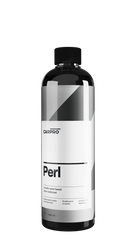
Shop NowPrefer a satin look? CarPro PERL is a water-based dressing that contains no solvents, and CarPro lists engine bays among its uses. CarPro suggests 1:1 to 1:3 for engines. Spray it on, wipe it into a thin, even layer and let it dry before you drive.

Water-Based · 1:1–1:3 for Engines
CarPro PERL $17.59
Water-based protective dressing for plastics, rubber, vinyl, finished leather, tires and engine bays. Rich satin look. 500 ml.
Shop NowCan You Clean an Engine Bay Without a Hose?
For light dirt, yes. Symplex Concentrate Multi-Purpose Cleaner's directions let you wipe it off with a damp microfiber towel instead of rinsing. Mix it 1:1, which Symplex suggests for light engine bay work. Spray one section, let it dwell briefly without letting it dry, agitate and wipe it off with a damp towel. Rinse the towel often.
Heavy, oily buildup is different. Quan Red, Super Degreaser and MultiX all call for a rinse, so save the wipe-down for maintenance cleans.

Light Engine Bay Work · Rinse or Wipe
Symplex Concentrate Multi-Purpose Cleaner & Degreaser from $12.99
pH 11–12 cleaner and degreaser for light to moderate engine bay work, wheel wells, tires and door jambs. 1:1 for engine bays. Quart, gallon and 5-gallon pail.
Shop NowWhat Not to Do
- Don't clean a hot engine. Quan Red's label and CarPro's MultiX precautions both say no hot surfaces.
- Don't blast the electrical parts. Cover them, and keep a strong stream of water off them.
- Don't let degreaser dry. Work in sections and rinse before it does.
- Don't skip the aluminum test. Spot-test bare or polished aluminum first with any degreaser, and keep MultiX off anodized aluminum.
- Don't dress the belts. Keep dressing off belts and pulleys.
Frequently Asked Questions
Is it safe to wash an engine bay?
Yes, if you do it carefully. Work on a cool engine, cover the electrical parts, use a degreaser at the maker's dilution and rinse gently. Symplex's Super Degreaser page says to protect electrical components during engine bay cleaning.
Can you pressure wash an engine bay?
We'd use a garden hose on a gentle setting instead. If you do use a pressure washer, stand well back, use a wide spray and keep it off the covered electrical parts.
Should the engine be hot or cold when you clean it?
Cool. Quan Red's label says to avoid hot surfaces and never let the product dry, and CarPro says not to use MultiX on hot surfaces. A hot engine dries degreaser before you can rinse it.
What's the best engine bay degreaser?
For most engines, Quan Red Pure at 1:4, or full strength for tougher jobs. Symplex Super Degreaser at 1:20 to 1:50 is a strong second. For light dirt, Symplex Concentrate Multi-Purpose Cleaner at 1:1 can be wiped off instead of rinsed.
Can you clean an engine bay without water?
Not completely, but you can skip the hose for light dirt. Symplex Concentrate Multi-Purpose Cleaner is mixed 1:1 with water, and its directions let you wipe it off with a damp microfiber instead of rinsing. Heavy grease needs a stronger degreaser and a rinse.
Does WD-40 clean an engine?
WD-40's own list of 2,000+ uses includes "Removes grime from engines." But WD-40 Company says those uses came from end users, aren't its recommendations and haven't been tested by the company. We'd use a degreaser made for the job and rinse it off.
What do you put on engine plastics after cleaning?
A dressing. Quan Finish lists engine bays on its label. Dilute it 50/50 for a natural sheen, or use it full strength for more shine. CarPro PERL at 1:1 to 1:3 gives a satin look. Keep dressing off the belts and pulleys.
Related Reading
Degrease It. Rinse It. Dress It.
Quan Red to cut the grime and Quan Finish to bring the plastics back.
Shop Quan Red →