What Is an APC in Car Detailing? Best APCs and Automotive Degreasers by Job
APC is detailer shorthand for all-purpose cleaner. It's the concentrate you mix into a spray bottle for tires, wheel wells, door jambs, engine bays and plenty of interior trim. A water-based degreaser is the same idea, pushed harder.
Most APCs are alkaline. That's what makes them work, and it's why they need care: the strength that lifts grease can also stain a seat, strip wax or mark bare aluminum. Here's how strong to mix one by each maker's own ratios, where it's safe, and which ones we stock for each job.
Quick Answer
An APC (all-purpose cleaner) is a concentrated, usually alkaline cleaner you dilute to fit the job: stronger for tires, wheel wells and engine bays, weaker for trim and interior touch points. Mix it by the maker's ratio, wear gloves and eye protection, and rinse or wipe off the residue. Keep any APC off hot panels, keep high-pH cleaners off leather, and keep strong mixes off bare aluminum. Our all-round pick is Quan Red, mixed 1:4 for routine work inside and out. For heavy grease by the gallon, use Symplex Super Degreaser; for leather and Alcantara, a pH-neutral cleaner like Koch Pol Star.
What Is an APC in Car Detailing?
An all-purpose cleaner is a surfactant cleaner that's usually sold as a concentrate, so you set the strength with water. The same jug can be a tire scrubber at one ratio and a door-panel wipe at another. That range is the whole appeal.
Why alkaline? CarPro's US importer explains that alkaline solutions are especially good at lifting organic grime like grease, oil, bug splatter, road film and bird droppings. In their words, "the higher the pH, the more powerful the punch."
pH runs 0 to 14, with 7 neutral and anything above it alkaline. The USGS notes that each whole number is a tenfold step, so pH 13 is a hundredfold jump from pH 11. More punch means more care.
APC vs Degreaser: What's the Difference?
There's no hard line. An APC is built to be diluted across many jobs; a degreaser is built for heavy oil and grease and usually gets used stronger. Plenty of products are sold as both:
- Quan Red's label calls it a "medium-duty all-purpose cleaner and degreaser" for interior and exterior surfaces.
- Symplex calls its Concentrate MPC "the versatile bridge between interior-safe cleaners and heavy-duty degreasers."
- Symplex Super Degreaser is a heavy-duty alkaline cleaner, yet Symplex rates it as weak as 1:400 for a light general wash.
Degreasers aren't all one chemistry, though. Jalopnik's explainer splits engine degreasers into water-based ones (surfactants, emulsifiers and alkaline agents in water) and solvent-based ones (hydrocarbon solvents such as mineral spirits). Whichever type you buy, the label settles the rest: what the maker clears it for and how strong to mix it.
How to Read a Dilution Ratio
Koch-Chemie explains it cleanly: 1:5 means 1 part product plus 5 parts water, 6 parts in total. So 1:5 is much stronger than 1:20. The bigger the second number, the weaker the mix. Quan Red's label spells it out as 1 part Red to 4 parts water, and Symplex and Koch also put product first. If a label writes it the other way round, go by its words. In a 32 oz spray bottle:
| Ratio | Concentrate | Water | Strength |
|---|---|---|---|
| 1:1 | 16 oz | 16 oz | Very strong |
| 1:4 | 6.4 oz | 25.6 oz | Strong |
| 1:10 | about 2.9 oz | about 29.1 oz | General |
| 1:20 | about 1.5 oz | about 30.5 oz | Light |
| 1:30 | about 1 oz | about 31 oz | Lighter still |
When in doubt, mix weaker: Koch says to start at a lower dosage so nothing gets attacked. Ratio charts for more tasks are in our APC Dilution Guide.
Light, Medium and Heavy: Each Maker's Own Ratios
Ratios don't carry over between brands. The same engine bay calls for anything from undiluted to 1:50, depending on whose bottle you're holding. Use the numbers each maker prints:
| Product | pH (source) | Exterior, wheels, engines | Interior, per the maker | Maker notes |
|---|---|---|---|---|
| Quan Red | 13–14 (SDS) | 1:4 routine; full strength for demanding jobs | Label lists seats, carpets and door jambs | Rinse thoroughly. Not on hot surfaces. Never let it dry. Gloves, protective clothing, eye/face protection |
| Symplex Super Degreaser | Not stated | Light 1:100–1:400; medium 1:20–1:50 (engine bay, wheels); heavy 1:5–1:10 | Not listed | Mask respirator at 1:5–1:10. Dwell 1–3 min. Don't let it dry |
| Symplex Concentrate MPC | 11–12 (Symplex) | Heavy 1:1; general 1:10; light 1:20 | Diluted, on non-delicate touch points: rubber mats, pedals, trim | Don't let it dry. Rinseable surfaces only. Avoid polished aluminum, untreated wood and delicate finishes untested |
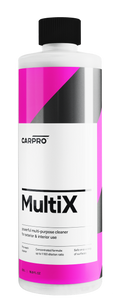
| CarPro MultiX | 10–11 (CarPro product page) | Tires and wheels undiluted–1:10; engine bay undiluted–1:20; pre-wash 1:1–1:20 | 1:20–1:30 | Not on hot surfaces or in direct sun. Not on anodized aluminum. Use gloves |
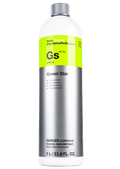
| Koch-Chemie Green Star | Not stated by Koch | 1:5–1:30, rinsed with a pressure washer | Interiors and textiles 1:10–1:20 | Not on hot surfaces. Don't let it dry. Check compatibility first |
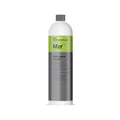
| Koch-Chemie MZR | 12.5 (Koch-Chemie USA) | Sold as an interior and special cleaner | 1:5–1:50 (Koch) on plastics, carpets, upholstery, headliners | Not on hot surfaces. Don't let it dry. Not listed for leather |
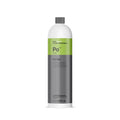
| Koch-Chemie Pol Star | 7.0 (Koch-Chemie USA) | Sold as an interior cleaner | 1:5–1:20 on leather, Alcantara, upholstery, carpets, headliners | pH-neutral |
About MultiX's pH: CarPro's product page says 10–11, but a post on the same CarPro US site puts it near 12.6 straight from the bottle and 10–11 at 1:10. So dilution does lower pH, just "not dramatically."
How to Choose an APC
- Match it to the surface. Tires, wheel wells and engines take a strong alkaline concentrate like Quan Red or Symplex Super Degreaser. Plastics and fabric want one whose maker names them, and leather and Alcantara need a pH-neutral cleaner. The surface table below has the details.
- Concentrate or ready-to-use? A ready-to-use spray comes at one strength. A concentrate lets you set the strength per job and goes far: at 1:20, a gallon makes 21 gallons of cleaner, about 84 spray bottles' worth.
The APCs and Degreasers We Stock, by Job
How we picked: we matched each product to the job its maker built it for, using the maker's own specs, directions and limits, and picked from what's on our shelves.
Best All-Rounder, Interior and Exterior: Quan Red
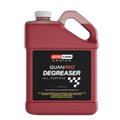
Our house APC and degreaser. Its label calls it a medium-duty all-purpose cleaner and degreaser for interior and exterior surfaces, naming engines, wheel wells, tires, seats, carpets and door jambs. Mix 1 part Red to 4 parts water for routine cleaning and rinse thoroughly, or go full strength for demanding jobs. It's strong stuff, pH 13–14 per its SDS, so wear gloves, protective clothing and eye or face protection, and work outdoors or somewhere well ventilated.

APC + Degreaser · Interior & Exterior
Quan Red Degreaser All-Purpose $11.99
Medium-duty APC and degreaser. 1:4 routine, full strength for demanding jobs. 32 oz.
Shop NowQuan's All-Purpose Cleaner by the Gallon: Quan Wave
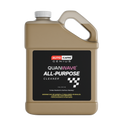
The Quan APC to buy in bulk, in 32 oz, gallon and 5-gallon sizes. Its SDS lists it as an all-purpose cleaner at pH above 12.5, and the QuanFinish dressing label names it alongside Red as the degreaser to prep with. Wear safety glasses with side shields, work somewhere well ventilated, and use it as its label directs.

All-Purpose Cleaner · Quart to 5 Gallon
Quan Wave All-Purpose Cleaner from $14.99
Quan's all-purpose cleaner, pH above 12.5 per its SDS. Quart to 5-gallon.
Shop NowBest by the Gallon for Heavy Grease: Symplex Super Degreaser
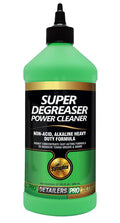
A non-acid, alkaline power cleaner that Symplex makes in Orlando, built for exteriors, engine compartments, shop floors and tools. It dilutes as far as 1:400 for light cleaning. At its heaviest 1:5–1:10 mix, Symplex recommends a mask respirator. Rinse it off, ideally with a pressure washer, and in engine bays protect the electrical components first.

Heavy-Duty · 1:5 to 1:400
Symplex Super Degreaser Power Cleaner from $11.99
Light 1:100–1:400, medium 1:20–1:50, heavy 1:5–1:10. Quart to 5-gallon pail.
Shop NowBest Bridge Cleaner for Jambs, Wheel Wells and Mats: Symplex Concentrate MPC
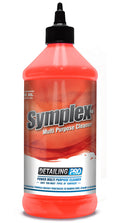
The in-between bottle: pH 11–12, butyl- and phosphate-free, biodegradable and Green Tea–Mandarin scented. Symplex rates its 1:1 mix for wheel wells, tires, light engine bay work and heavily soiled door jambs. Diluted, it also handles non-delicate interior touch points like rubber mats, pedals and trim, but only on surfaces you can rinse. Keep it off dashes and leather, and skip untreated wood trim unless you've tested it.

Multi-Purpose · pH 11–12
Symplex Concentrate Multi-Purpose Cleaner & Degreaser from $12.99
Heavy 1:1, general 1:10, light 1:20. Quart to 5-gallon pail.
Shop NowBest for Dashboards and Interior Plastics: CarPro MultiX
CarPro lists MultiX for surfaces "from dashboards to exterior trims," plus tires, engine bays and interior stains. Follow its precautions: test a spot before each use, wear gloves, keep it off skin and out of your eyes, and never use it on anodized aluminum. Want to try it first? The 50 ml sample is $3.99. It also comes in 1 L and gallon sizes.

Interior to Engine Bay · pH 10–11 (CarPro)
CARPRO MultiX All Purpose Cleaner Concentrate $18.99
Interior 1:20–1:30, engine bay undiluted to 1:20. 500 ml.
Shop NowUniversal Cleaner for Exteriors, Engines and Textiles: Koch-Chemie Green Star
Koch's highly concentrated, phosphate- and solvent-free alkaline universal cleaner, with ratios for exteriors, engines, interiors and textiles. Koch says its special corrosion inhibitors give it high material compatibility with sensitive parts like anodized aluminum. Check a spot first anyway, as Koch advises. More in Koch-Chemie Green Star vs Pol Star.

Universal Cleaner · 1:5 to 1:30
Koch-Chemie Green Star from $14.99
1:5–1:30 outside, 1:10–1:20 inside. 1 L and 5 L.
Shop NowFor Heavy-Traffic Interior Spots: Koch-Chemie Mehrzweckreiniger (MZR)
Koch's alkaline interior cleaner for oil, grease, ink, soot and nicotine on alkali-resistant plastics, textiles, upholstery and headliners. Koch-Chemie USA aims it at high-traffic spots like door panels and pedals. Wipe the residue off with a damp cloth. Leather isn't on Koch's list, so keep MZR off it.

Interior APC · pH 12.5
Koch-Chemie Mehrzweckreiniger (MZR) $20.99
Alkaline interior cleaner, 1:5–1:50. 1 L.
Shop NowFor Leather and Alcantara (pH-Neutral): Koch-Chemie Pol Star
This is where a high-pH APC doesn't belong. CarPro US puts leather (especially aniline or vintage), Alcantara and microsuede on its avoid list for high-pH APCs. Pol Star is a neutral pH 7.0 interior cleaner that Koch-Chemie USA lists for leather and Alcantara. Use it from a pump foamer or trigger sprayer.

pH-Neutral Interior · pH 7.0
Koch-Chemie Pol Star from $24.99
Neutral interior cleaner, 1:5–1:20. 1 L and 5 L.
Shop NowWhere an APC Is Safe, and Where It Isn't
| Surface | Use an APC? | How |
|---|---|---|
| Tires, wheel wells | Yes | The maker's tire or wheel ratio, weak end first. Agitate, then rinse |
| Engine bay | Yes, on a cool engine | Electrics covered, the maker's engine ratio, strong mixes off bare aluminum, low water pressure |
| Door jambs | Yes | General mix. Quan Red and Symplex MPC both name door jambs. Rinse or wipe with a damp microfiber |
| Rubber mats, pedals | Yes | Diluted. Symplex MPC names them |
| Hard plastics, vinyl, door panels | Yes, diluted | Pick one whose maker names dashboards or plastics, like MultiX or MZR. Near electronics, spray the towel |
| Fabric seats, carpet | With care | Quan Red lists seats and carpets; Green Star and MZR list textiles. Test for dye bleed or stiffening, then extract |
| Leather, Alcantara, microsuede | No high-pH APC | A pH-neutral interior cleaner like Pol Star |
| Touchscreens | No | A soft, clean cloth. Ford says not to use detergent or any solvent on its SYNC screen |
| Glass | Not the right tool | Use a glass cleaner. If APC overspray lands on glass, rinse it before it dries |
| Paint | Pre-wash or touchless wash | A printed pre-wash ratio (Symplex Super Degreaser 1:100–1:400, MultiX 1:1–1:20) on a cool panel, rinsed before it dries. Hand-wash with a car shampoo |
| Bare or polished aluminum | Not a strong mix | Keep strong alkaline cleaners off, wheel cleaners included. For a wash, use a car soap like Quan Pink or Symplex Platinum |
| Anodized aluminum | Only if the maker clears it | CarPro says never with MultiX. Koch credits Green Star's corrosion inhibitors with high compatibility, but says to check first |
| Rubber seals | Light mixes only | Over-concentrated chemistry can attack rubber seals, Koch warns |
Why the aluminum caution? NIOSH lists aluminum among the metals sodium hydroxide (lye) is incompatible with, and Symplex says to avoid polished aluminum with MPC unless you've tested first. Wheel cleaners need the same check. Quan Brown's label covers factory-painted, clear-coated and chrome wheels. Keep it off anodized wheels and uncoated polished aluminum, avoid eye and skin contact, and use it only in a well-ventilated area, as the label directs.
For washing bare or polished aluminum, a car soap is the safer pick. Two we stock are labeled safe for every exterior surface: Quan Pink's label says it's safe for all exterior surfaces, and Symplex says the same of Symplex Platinum, naming polished aluminum among them.
How to Use an APC Safely, Step by Step
Pro Tip
Keep two labeled bottles: a weak interior mix and a strong exterior mix. Write the product and the ratio on each in marker. It helps keep the tire-strength bottle off your door panels.
Engine Bays: How Strong, and How Careful
Quan Red's label covers degreasing engines, mixed 1:4 for routine cleaning or full strength for demanding jobs, and Symplex, CarPro and Koch each print an engine-bay ratio in the table above. The method matters as much as the mix. Chemical Guys' engine-bay guide recommends:
- Let the engine cool completely. Heat can make degreasers flash-dry.
- Cover the alternator, intake, fuse box and battery terminals with plastic bags or dry towels.
- Go lighter on plastic covers and rubber. Save the strong mix for the greasiest spots.
- Keep water pressure low and away from covered electrics.
- Finish with a top-down rinse, then dry with towels and compressed air and check every connector before you start the car.
On bare, uncoated aluminum, we'd go easier: the weak end of the maker's engine ratio, a short dwell and a thorough rinse, since NIOSH flags aluminum as incompatible with lye. For light grime there, a damp microfiber is enough.
Full walkthrough: How to Clean an Engine Bay Safely.
Can You Use an APC on Paint?
Yes, at the maker's light ratio, as a pre-wash or touchless wash. Symplex rates Super Degreaser 1:100–1:400 for a general car wash and lists it for pre-wash, bug removal and frictionless washing. MultiX runs 1:1–1:20 as a pre-wash. Keep the panel cool and rinse before anything dries.
The catch is protection. CarPro US says high-pH cleaners can strip wax or sealant, especially above pH 10–11, used undiluted or nearly so, or when protection is already worn. That's handy before a polish or coating, but for a routine hand wash on a protected car, use a wax-safe shampoo. Quan Pink's label says it breaks down grime without stripping wax. Symplex Platinum is pH 7.0–7.5, and Symplex says it won't strip wax, sealants or ceramic coatings.
Frequently Asked Questions
What is an APC for car cleaning?
APC means all-purpose cleaner: a concentrated, usually alkaline cleaner you dilute to the job. Mix it stronger for tires, wheel wells and engine bays, weaker for trim and interiors, then rinse or wipe off the residue.
What's the difference between an APC and a degreaser?
Mostly strength and focus. An APC is diluted across many jobs; a degreaser is made for heavy oil and grease and usually used stronger. Many products are both, like Quan Red, whose label calls it an all-purpose cleaner and degreaser.
What is the best APC for car detailing?
For one bottle that covers interior and exterior, Quan Red, mixed 1:4 for routine work. For bulk, Quan Wave is Quan's all-purpose cleaner in gallon and 5-gallon jugs, Symplex Super Degreaser runs from 1:5 for heavy grease to 1:400 for a light wash, and Symplex MPC is the in-between bridge cleaner at pH 11–12.
What is the best APC for car interiors?
Match it to the surface. For seats and carpets, Quan Red mixed 1:4 (its label lists both); test a hidden spot for dye bleed or stiffening first, then rinse or extract. Use Symplex MPC for rubber mats and pedals, CarPro MultiX for dashboards (1:20–1:30) and a pH-neutral cleaner like Koch Pol Star (pH 7.0) for leather and Alcantara. Whatever you use inside, wear gloves and eye protection and keep the doors open.
What is the best automotive degreaser for the exterior?
For heavy grease, a strong alkaline concentrate at the maker's heavy ratio: Quan Red at full strength, with the gloves, protective clothing and eye/face protection its label calls for, or Symplex Super Degreaser at 1:5–1:10 with the mask respirator Symplex recommends. Save those mixes for greasy areas like wheel wells and undercarriages. On paint, switch to a printed pre-wash ratio, like Symplex Super Degreaser at 1:100–1:400 or MultiX at 1:1–1:20, since strong high-pH mixes can strip wax. Keep any degreaser off hot panels.
What do professional car detailers use?
A pro-style shelf starts with a few concentrates mixed to the job: an APC or degreaser like Quan Red or Symplex Super Degreaser, a car shampoo like Quan Pink or Symplex Platinum, a wheel cleaner and a pH-neutral interior cleaner for leather like Koch Pol Star. Add brushes, microfiber towels, a pressure washer and a wet/dry vac or extractor.
What is the best brand to use for car detailing?
No single brand wins every job. Pick by the job and follow that maker's ratio: a strong alkaline APC for tires and engines (Quan Red, Symplex Super Degreaser), a bridge cleaner for jambs and mats (Symplex MPC), a dashboard-rated APC for plastics (CarPro MultiX) and a pH-neutral cleaner for leather (Koch Pol Star).
Can I use an APC on leather?
Not a high-pH one. CarPro US lists leather and Alcantara among the surfaces to keep high-pH APCs off. Use a pH-neutral cleaner like Koch Pol Star, which Koch-Chemie USA lists for both.
Is there a pH-neutral APC?
Not usually. Most APCs are alkaline by design, because that's what lifts grease. For neutral, use a pH-neutral interior cleaner like Koch Pol Star (pH 7.0).
Can I put APC in a foam cannon?
Some makers say yes: Symplex lists a foam cannon for Super Degreaser, and CarPro says MultiX can be foamed. The cannon mixes the bottle solution into the water stream, so what lands on the panel is weaker than what's in the bottle. Rinse it off before it dries.
Related Reading
- Koch Chemie Green Star vs Pol Star: Which APC Do You Actually Need?
- APC Dilution Guide: Ratios for Every Detailing Task
- How to Clean an Engine Bay Safely, Step by Step
- How to Clean Car Interior Plastics and Vinyl
- How to Get Stains Out of Car Carpet and Upholstery
- Best Wheel Cleaner for Cars: Acid-Free, Acid & Iron-Reactive Picks for Brake Dust (2026)
Mix It to the Job
Quan Red for the all-round work, Symplex Super Degreaser by the gallon and Koch Pol Star for leather and Alcantara.
Shop Quan Red →