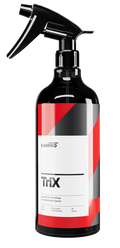
CarPro TarX Review: Effortless Tar & Adhesive Removal
When it comes to maintaining the pristine look of your vehicle, nothing can be more frustrating than stubborn tar and adhesive residues. Fortunately, CarPro TarX offers a solution that promises to make these unsightly blemishes a thing of the past.
Quick Answer
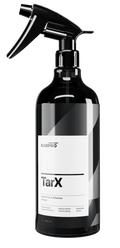
CarPro TarX is a professional strength tar remover. CarPro says it also tackles insects, tire marks, adhesives and traffic film. Keep it off sensitive plastics and acrylic paint, and never let it dry on the surface. On PPF, work a cool, small section and don't let it sit longer than 30 seconds.
The Symplex Swap
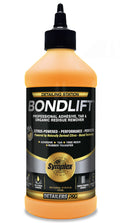
The Symplex swap for TarX: BondLift, a citrus-based tar and adhesive remover.

Symplex BondLift $17.99
Citrus-based remover for tar, adhesive residue, resin, rubber transfer and ink.
Symplex manufactures in Orlando. How to remove tree sap without damaging paint →
What Makes CarPro TarX Stand Out?
CarPro TarX is a product that has been specifically engineered to address the challenges posed by tar, asphalt, and adhesive residues. Beyond tar, CarPro lists insects, tire marks and traffic film. That makes it a good choice for car owners in Florida, where road tar and bug splatter can be particularly challenging due to the state's warm climate. It is not for every surface, though: CarPro says to avoid sensitive plastics and acrylic paint.

Recommended
CARPRO TarX 500ml (17oz)
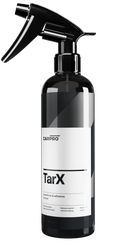
CarPro TarX is a professional strength tar remover that also tackles insects, tire marks, adhesives and traffic film. CarPro says to avoid sensitive plastics and acrylic paint, and never let it dry on the surface.
Shop NowOne of the key features that set CarPro TarX apart is its ability to dissolve tar and adhesives without the need for harsh scrubbing, reducing the risk of damaging your vehicle's finish. Additionally, its fast-acting formula saves time and effort, making it a favorite among both professional detailers and DIY enthusiasts.
What TarX Removes — and What It Doesn't
TarX is a solvent-based remover, so it shines on the contamination that is sticky or petroleum-based: road tar, asphalt, adhesive and glue residue, and sticker and decal gunk. CarPro also lists insects, tire marks and traffic film. Tree sap is not on its list. Spray it on, let it dwell, and it dissolves the bond so the residue wipes away without scrubbing or scraping at your clear coat.
What TarX does not do is remove iron fallout — the embedded brake-dust and rail-dust particles that cause orange specks and rough paint. That is a job for an iron remover like CarPro IronX (see our IronX review). If your car has both tar and iron — which is common — you can knock out both in one step with CarPro TriX, the combined tar-and-iron remover we cover in the iron decon roundup.
How to Use CarPro TarX
Using CarPro TarX is straightforward, but following the correct method ensures optimal results. Here’s a step-by-step guide to help you use this product effectively.
Pro Tip
For best results, use CarPro TarX in a shaded area to prevent the product from drying too quickly on the surface.
Who Should Use CarPro TarX?
CarPro TarX is suitable for anyone looking to maintain their vehicle's appearance without resorting to harsh chemicals. Whether you're a professional detailer or a car enthusiast, this product offers a reliable solution for removing tar and adhesives. Its ease of use and effectiveness make it a must-have for those who frequently encounter tar and road grime, especially in regions with warmer climates like Florida.
This product is also beneficial for those who value their time and want a product that works quickly without compromising safety or quality. The convenience of CarPro TarX means you can spend less time cleaning and more time enjoying your ride.

Pairing CarPro TarX with other CarPro products like IronX can further enhance your vehicle's appearance by addressing different types of contaminants. For a complete set of solutions, check out the full CarPro collection.
Prefer a citrus-based remover? Symplex BondLift covers the same ground: tar, tree resin, sticker and badge adhesive, rubber transfer, grease and ink. Its citrus cleaners soften the residue so it wipes off with less scraping. Test it in a hidden spot first, then use it on a cool, solvent-resistant exterior surface out of direct sun: let it dwell briefly without drying, wipe, then wash the area. Avoid long contact with vinyl wrap, PPF, decals, matte finishes, fresh paint and interior surfaces.
Citrus-Based · Ready to Use
Symplex BondLift Adhesive, Tar & Residue Remover $17.99
Softens adhesive, tar, resin and rubber transfer so it releases with less scraping.
Shop NowRelated Reading
- CarPro IronX review and iron decon shootout — How TarX pairs with IronX for a complete decontamination workflow
- Complete CarPro product guide — Where TarX fits in the full CarPro detailing system
- CarPro UltraCut review — What to use after decon when there's paint correction needed
Frequently Asked Questions
Is CarPro TarX safe on all surfaces?
No. CarPro says to avoid sensitive plastics and acrylic paint, and to test it in a hidden area before use. On PPF, work a cool, small section at a time and don't let it sit longer than 30 seconds.
How often should I use CarPro TarX?
The frequency of use depends on your driving conditions. For vehicles frequently exposed to tar and adhesives, using TarX every few months is recommended.
Can CarPro TarX be used in direct sunlight?
No. CarPro says not to use TarX in direct sun or on a hot surface, and not to let it dry on the surface. Work in the shade on a cool panel.
What should I do if TarX dries on the surface?
If TarX dries on the surface, simply reapply the product and wipe it away with a microfiber cloth.
TarX vs TriX — which should I use?
Use TriX if you need to remove tar and iron fallout in one step; use TarX when you only need tar and adhesive removal. TarX is the focused tar specialist; TriX is the two-in-one time-saver.
Does TarX remove tree sap and sticker residue?
Sticker residue, yes: CarPro lists adhesives. Tree sap is not on CarPro's list, which names tar, asphalt, insects, tire marks, adhesives and traffic film. For a stubborn spot, CarPro says to apply TarX to a microfiber and lift it, and to reapply as needed rather than scrubbing.
Where does TarX fit in a full decon?
Wash first, then chemical decon (tar with TarX, iron with IronX), then clay, then protect. It is an early decontamination step — the full order is in our complete CarPro product guide.
Ready to Get Started?
Experience the ease of tar and adhesive removal with CarPro TarX. Your car will thank you for it!
Shop CarPro →