Windshield Rain Repellent: What Actually Works, and How Long It Really Lasts
Everyone's tried the bottle from the gas station. You wipe it on, the first rain is genuinely impressive, and three weeks later you're back to wipers on full. That's not you doing it wrong — it's the product doing exactly what that chemistry does. There's a real gap between a repellent that sits on the glass and a coating that bonds to it, and the difference shows up in months, not days.
Quick Answer
Yes, windshield rain repellent is worth it — above about 40 mph the water leaves the glass on its own and you barely touch the wipers. What matters is which type you buy. A wipe-on repellent lasts weeks. A bonded glass coating like CarPro FlyBy30 ($14.99) lasts months. A ceramic glass coating like CarPro DQUARTZ GForce ($34.99) is rated for over a year. All of them fail early for the same reason: the glass wasn't properly decontaminated first.
The Symplex Swap
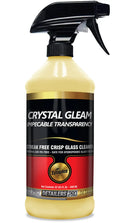
Start with clean glass: Symplex Crystal Gleam is ammonia- and IPA-free and safe on tint.

Symplex Crystal Gleam $22.99
Ammonia- and IPA-free glass cleaner that's safe on tinted windows.
Symplex manufactures in Orlando.

Is Windshield Rain Repellent Worth It?
For most drivers, yes — and the reason is speed, not rain.
Treated glass makes water bead up instead of spreading into a film. Once you're moving at roughly 40 mph and up, airflow pushes those beads off the windshield before they ever reach the wiper blades. You get a clear view with the wipers on intermittent, or off entirely. In a Central Florida afternoon storm, that's the difference between driving and squinting.
It also helps at night. A water film scatters oncoming headlights across your field of view; beaded water doesn't smear the same way. And because the wipers run less, the blades last longer and chatter less.
Where it's oversold: it won't fix worn wiper blades, it won't clear heavy standing rain at low speed, and it does nothing about pitted or sandblasted glass. If your windshield looks hazy in low sun, that's abrasion damage, and a coating will make it shinier but no clearer.
The Three Types, and Why They Last So Differently
Everything sold as "rain repellent" falls into one of three buckets. They're not competing products so much as three different commitments.
- Wipe-on repellents. The supermarket and parts-store bottles. A polymer sits on top of the glass and washes away under wipers, washer fluid and UV. Cheap, instant, and gone in weeks. Fine if you want to try the effect before committing.
- Bonded glass coatings. A silica-based layer that chemically bonds to the glass surface rather than resting on it. Takes a few minutes to apply properly and a short cure, and in exchange it survives wiper passes for months. This is the sweet spot for a daily driver.
- Ceramic glass coatings. The most durable tier, with a harder cured layer and the longest rated life. More prep, more care during application, and a price to match — but you do it once a year instead of monthly.
One thing all three share: they only stick to genuinely clean glass. Skip prep and even the best coating behaves like the cheap stuff.
What We Use, by Tier
Interior fogging — CarPro Fog Fight
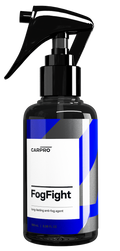
Different problem, different product, and worth getting straight before you buy anything. Rain repellent goes on the outside and sheds water. Anti-fog goes on the inside and stops condensation. CarPro Fog Fight ($9.99) is the interior one — apply and buff, and CarPro rates it for weeks of protection per application on windshields, mirrors and interior glass. If your actual complaint is fogging up on humid mornings, this is the bottle you want, not a repellent.

The daily-driver pick — CarPro FlyBy30
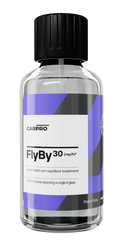
FlyBy30 ($14.99 for 20ml) is CarPro's DIY-friendly glass coating, rated for months of hydrophobic rain repellency on all automotive glass. Application is genuinely simple — clean glass, wipe on, level off — which is the main reason we point most people here first. There's a 50ml bottle ($21.99) if you're doing more than one car, and a 20ml full kit ($21.99) that bundles the applicator side of it.
Twenty millilitres sounds like nothing. It's plenty — you're wetting an applicator, not pouring it on.
The once-a-year pick — CarPro DQUARTZ GForce
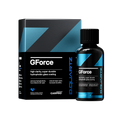
DQUARTZ GForce ($34.99 for the 10ml kit) is the ceramic tier — a nano-diamond glass coating CarPro rates for over a year, with water sheeting off at highway speed. It's the one to pick if you'd rather prep thoroughly once than top up every few months. There's a 50ml size ($89.99) for shop use.
Read the safety note further down before you open this one. It's the most hazardous product on this page and it deserves ventilation and gloves.

Prep Is the Whole Job
If a coating fails in a fortnight, prep is almost always why. Windshield glass collects a film of wiper rubber, road grime, exhaust residue and old repellent, and a coating bonded to that film leaves with it.
- Wash the glass with the car. Get the loose grit off first.
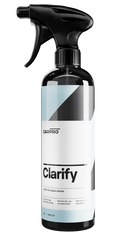
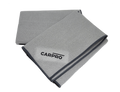
- Clean it properly. CarPro Clarify ($14.99) and a dedicated GlassFiber towel ($9.99). Use a glass towel, not the one that's been on your paint — wax residue on glass ruins a coating before it starts.
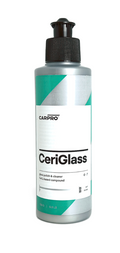
- Polish off what won't wipe off. Run your fingers over the dry glass. Rough patches, wiper haze and water-spot etching need mechanical removal — CarPro CeriGlass ($13.99) is the glass polish for that. This is the step people skip and then blame the coating.
- Final wipe and dry. Residue-free and completely dry before the coating goes on.
- Apply thin, level thoroughly. Thin coats. Any high spots you leave behind will haze and you'll be polishing them back off.
- Let it cure. Keep it dry for the time on the bottle. Driving it through a storm an hour after application is how you waste the bottle.

For a deeper look at glass cleaning itself, our glass cleaner guide covers the cleaning side, and the CeriGlass guide walks through polishing etched glass.
Handling and Safety
These are solvent-based products. Per the manufacturers' safety data sheets:
- All of them are combustible or flammable. Work outdoors or in a ventilated space, away from heat, sparks and open flame. No smoking.
- CarPro FlyBy30 causes skin irritation and serious eye irritation. Gloves and eye protection.
- CarPro Fog Fight causes serious eye damage and may cause an allergic skin reaction. Don't rub your eyes mid-application.
- CarPro DQUARTZ is the most hazardous here — it causes serious eye damage, may cause an allergic skin reaction, and may be fatal if swallowed and enters the airways. Gloves, eye protection, ventilation, and never decant it into a drinks bottle.
Keep all of it away from kids and pets, and don't apply a coating in direct sun on hot glass — it flashes off before you can level it, which is both a waste and a mess to correct.
Windshield Rain Repellent FAQ
What can you put on your windshield to repel rain?
A dedicated automotive glass coating. Wipe-on repellents work for a few weeks; a bonded coating like FlyBy30 lasts months and a ceramic coating like DQUARTZ GForce is rated for over a year. Apply to clean, decontaminated glass.
How long does windshield rain repellent last?
Weeks for a wipe-on polymer, months for a bonded glass coating, over a year for a ceramic glass coating — assuming the glass was properly prepped. Heavy wiper use, harsh washer fluid and abrasive blades all shorten it.
Does rain repellent damage wipers or glass?
No. If anything the wipers last longer because they run less and glide more easily. What does cause trouble is applying a coating over an old, failing one — strip and re-prep rather than layering.
Can I put rain repellent on the inside of the windshield?
No — these are exterior products. The interior problem is condensation, and that needs an anti-fog treatment like Fog Fight instead.
Why did my rain repellent stop working so fast?
Almost always prep. Wiper rubber, exhaust film and old product left on the glass stop the coating bonding, so it leaves with the film. Clean properly, and polish the glass if it still feels rough after cleaning.
Will it work on side windows and mirrors?
Yes, and it's worth doing — side glass and mirrors are where beading helps most in stop-start traffic, because there's no wiper to clear them at all.
Not sure whether your glass needs polishing before it's coated? Bring it by the shop in Kissimmee — we'll feel the glass with you and tell you whether it's film or etching.