CarPro CeriGlass Review: How to Polish Glass and Remove Wiper Haze & Water Spot Etching
CarPro CeriGlass glass polish is the answer to a problem most people don't realize is fixable: glass that's clean but not clear. Wiper haze that flares in oncoming headlights, water spot rings etched into the windshield, a fine gray dullness that no glass cleaner touches — that's not dirt, it's surface damage, and it polishes out. This review covers how CeriGlass works, the kit-versus-bottle question, and the step-by-step of polishing automotive glass at home.
Quick Answer
CarPro CeriGlass is a cerium oxide glass polish that removes wiper haze, water spot etching, and light scratches that no glass cleaner can touch. First-timers should buy the kit; keep Clarify on hand for maintenance — and skip it for headlights, which are plastic, not glass.
Why Your Windshield Is Clean but Still Hazy
Automotive glass takes years of abuse that cleaners were never designed to fix. Wiper blades drag grit across the same arc thousands of times, leaving micro-scratches that scatter light — worst at night, in rain, facing low sun. Hard water dries on side glass and etches mineral rings into the surface. Road film bonds in a layer that towels burnish rather than remove. A glass cleaner dissolves what's sitting on the glass; none of it touches damage that's in the glass.
That's the line to remember: cleaners clean, polishes correct. If the defect survives a proper cleaning, it needs abrasives.
How CarPro CeriGlass Glass Polish Works
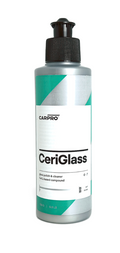
CeriGlass is built on professional-grade cerium oxide — the same abrasive family the glass industry itself relies on — suspended in a polish you can work by hand or with a machine and a glass pad. Where paint polish would glide uselessly over glass (glass is far harder than clear coat), cerium oxide actually levels the surface, which is what removes:
- Wiper marks and light scratches — the arc-shaped haze that flares at night.
- Water spots and mineral deposits — including rings that have etched past what a chemical remover can dissolve.
- Bonded surface contamination — the stubborn film regular glass cleaners can't break.
The result is restored optical clarity — the difference is most dramatic on a windshield at night in the rain, which is exactly where hazy glass is most dangerous.
CeriGlass Kit vs Bottle: Which Should You Buy?
This is the most-asked CeriGlass question, and the answer comes down to what's already in your garage.
| Option | What it is | Best for |
|---|---|---|
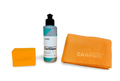
| CeriGlass Kit (150ml) | The polish bundled with glass-specific application accessories (see the product page for current contents) | First-time glass polishing — everything to start in one box |
| CeriGlass 150ml bottle | The polish alone | Refills, or if you already own glass pads |
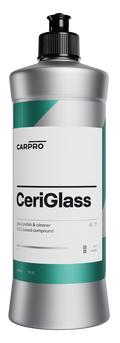
| CeriGlass 500ml | The big bottle | Pros and repeat users polishing many vehicles |
If this is your first glass correction, buy the kit — glass polishing works properly with glass-specific pads, and the kit solves that on day one. Coming back for more? The bare bottles are your refill path.

Recommended
CARPRO CeriGlass Polish Kit (150ml)
The complete glass-polishing starter: CeriGlass plus the application accessories to begin out of the box.
Shop NowHow to Polish Glass With CeriGlass, Step by Step
Set expectations honestly: glass is hard, so glass correction is slower than paint correction. Wiper haze and etched spots respond well; a deep gouge you can catch with a fingernail is windshield-repair territory, not polish territory.
Set Your Expectations: Why Glass Polishing Is Slower Than Paint
If you've machine-polished paint before, recalibrate before you start on glass. Clear coat is soft enough that a compound shows results in a single section pass; glass is dramatically harder, which is precisely why it scratches slowly — and corrects slowly. The same wiper haze that took three years to develop will take real, repeated passes to remove. This isn't a flaw in the product; it's the physics of the surface. Budget more time per section than you would on paint, check progress often, and let the abrasive do the accumulating work.
A few technique notes that make the job go right:
- Work clean. Any grit trapped under the pad becomes a scratch-maker on a surface you're trying to clarify. Clean the glass, clean the pad, and refresh the pad face regularly.
- Mind the edges and trim. Tape off rubber seals and painted trim around the glass — polish residue in textured rubber is tedious to remove, and edges concentrate pressure.
- Interior side and tint film are different animals. Aftermarket tint is a plastic film applied to the interior surface — never run an abrasive polish over tint film. CeriGlass is for the glass itself, which in practice means exterior surfaces and unfilmed glass.
- Stay patient at night-test time. The real verdict on wiper haze comes after dark, facing headlights. Judge your finish there, not in the garage.
Pro Tip
chips, cracks, and deep gouges are structural, not cosmetic. A windshield repair specialist (or replacement) is the honest answer there — no polish safely grinds out a stone strike.
CeriGlass vs a Glass Cleaner: You Need Both
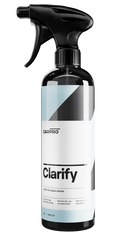
CeriGlass corrects; Clarify maintains. Clarify is an ammonia-free glass cleaner that cuts film, fingerprints, and haze for streak-free clarity — and because it skips the ammonia, it's safe for tinted windows and ceramic coated glass. The realistic routine: polish with CeriGlass once to reset the glass to genuinely clear, then keep it that way with Clarify so you rarely need abrasives again.

Recommended
CARPRO Clarify Glass Cleaner 500ml (17oz)
Ammonia-free, streak-free glass cleaner that's safe for tint and coated glass — the everyday maintainer.
Shop NowThe Bottom Line
If your glass has wiper haze, etched water spots, or light scratches, no cleaner will fix it — CarPro CeriGlass will. The cerium oxide formula restores real optical clarity, the kit gets first-timers started with the right accessories, and the whole job pairs naturally with Clarify for maintenance. Browse the rest of the CARPRO collection to see where glass care fits your routine, or start with our complete CarPro product guide.
Related Reading
- Complete CarPro product guide — Every CarPro product and when to use it
- CQUARTZ UK 3.0 review — Protect freshly polished glass and paint with CarPro's flagship coating
- How to apply CarPro CQuartz — The coating application guide that follows perfect prep
Frequently Asked Questions
Will CeriGlass fix my foggy headlights?
No — and this matters. Headlight lenses are polycarbonate plastic, not glass, and they haze from UV degradation, not surface scratching. CeriGlass is engineered for real glass. Cloudy headlights need a dedicated plastic restoration process (sanding and coating), which is a different job entirely.
Can I use CeriGlass by hand, or do I need a machine?
Both work — CeriGlass is designed for hand application or a machine polisher with a glass pad. Hand work is fine for spot-treating a small etched area; for a whole windshield's worth of wiper haze, the machine earns its keep. Glass is hard, and the machine supplies the patience.
Will polishing remove the coating or rain repellent on my glass?
Assume yes — an abrasive polish levels the top surface, and any glass coating or repellent lives exactly there. Polish first, then reapply your glass coating or repellent afterward. (Routine cleaning is different: Clarify is compatible with ceramic coated glass.)
Can CeriGlass remove deep scratches from a windshield?
It removes wiper marks and light scratches. A scratch you can clearly catch with a fingernail runs too deep to polish out safely and evenly — heavy localized polishing on glass risks optical distortion. For genuine gouges or chips, see a windshield repair specialist.
My water spots came back after cleaning — do I need to polish?
Try chemistry first. If spots dissolve with a dedicated water spot remover like Spotless 2.0, they hadn't etched yet and you're done. Spots that survive the chemical step have etched into the glass surface — that's when CeriGlass takes over.
Is Clarify safe on tinted windows?
Yes. Clarify is ammonia-free specifically so it's safe on window tint, and it's compatible with ceramic coated glass too. It's the everyday cleaner in the CarPro glass system; CeriGlass is the correction step you break out when clarity is actually damaged.
See Clearly Again
Wiper haze and etched spots polish out — CeriGlass is how. Start with the kit and get real optical clarity back.
Shop CarPro →