Quick Answer
For washing cars, flow rate (GPM) matters more than pressure (PSI). Flow is what rinses dirt off and what makes a foam cannon produce thick foam; pressure past about 1,500 PSI mostly just adds risk to trim and badges. Most foam cannons want at least 1.4 GPM. The MAXFLOW MPro 25 Gen 2 at 2.5 GPM is the machine we'd put in most driveways, and the 3.3 GPM DDM is the one for people who wash cars for a living.
PSI sells machines. GPM washes cars.
Walk down the pressure washer aisle and every box shouts one number at you. 2000 PSI. 2300 PSI. 3000 PSI. Nobody puts flow rate on the front of the box, because flow rate doesn't look impressive next to a four-digit pressure figure.
But pressure and flow do two different jobs, and only one of them is really about washing a car.
Pressure is cutting force. It's what strips paint off a fence, blasts moss out of pavers, and — if you get careless with a narrow tip on a badge or a strip of trim — what takes those off too. Once you're past roughly 1,500 PSI, more pressure isn't helping you wash a car. It's just raising the cost of a mistake.
Flow is rinsing force. Gallons per minute is how much water is actually moving through the gun. Flow is what carries loosened dirt off the panel and down the driveway, and it's what fills a foam cannon fast enough to make thick, clinging foam instead of a wet drizzle that slides straight off.
The practical version: a low-flow machine makes you work close to the paint to get anything done, because pressure is all you have. A high-flow machine lets you stand back and let the water do it. Standing back is how you avoid putting a mark in the clear coat.
Pro Tip
There's a quick sanity check on this. The machine professional detailers actually buy — the Kränzle K1122TST, around $1,500 — runs 1,400 PSI. That's less pressure than a $170 big-box unit. What it has is flow. If pressure were the thing that mattered, the pro machines would be the ones with the big numbers, and they're not.
The number on the box usually isn't the number at the nozzle
Here's the part that catches people out, and it's worth understanding before you compare anything.
Most consumer pressure washers publish two very different figures: a max rating and a rated rating. Max is measured under conditions you'll never actually wash in. Rated is what the machine produces in sustained use, and it's the number certification bodies like the PWMA hold manufacturers to.
The Sun Joe SPX3000 is the cleanest example, and it isn't a knock on the machine — Sun Joe publishes both numbers, on its own two websites. The product site lists the SPX3000 at 2030 PSI and 1.76 GPM. Sun Joe's own store describes the same machine as generating “2030 PSI of certified rated water pressure and 1.2 GPM of certified rated water flow.” Same washer, and a flow figure that drops by a third depending on which number you're being shown.
Neither number is dishonest. 1.76 is what the pump can do momentarily; 1.2 is what it sustains under certification. But if you compare one machine's max against another's rated, you'll reach the wrong conclusion — which is exactly what a spec sheet full of unlabelled numbers invites you to do.
That gap is why a machine can look like it beats a professional unit on the shelf and lose badly in the driveway. When you compare washers, compare rated flow. If a spec sheet only gives you a max figure, treat it as marketing.
Eight electric pressure washers, sorted by the number that matters
Here's the same set of machines a detailer actually cross-shops, ranked by rated flow instead of peak pressure. Watch what happens to the ordering.
| Machine | Peak PSI | GPM | Weight | Street price |
|---|---|---|---|---|
| MAXFLOW DDM | 1,500 | 3.3 | 21.6 lb | $849.98 |
| MAXFLOW MPro 25 Gen 2 | 1,500 | 2.5 | 22.5 lb | $499.98 |
| Kränzle K1122TST | 1,400 | 2.1 | 80 lb | ~$1,500 |
| Active 2.0 | 1,800 | 2.0 | 24 lb | ~$330 |
| Kärcher K5 Premium | 2,000 | 1.4 | 28.9 lb | ~$370 |
| MAXFLOW MX3 | 2,500 | 1.2 | 22.5 lb | $449.99 |
| Ryobi RY142300 | 2,300 | 1.2 | 49.3 lb | ~$250 |
| Sun Joe SPX3000 | 2,030 | 1.2 | 24.3 lb | ~$170 |
Every figure above is the manufacturer's own published number, checked September 2026. Two caveats worth stating plainly, because this article is about reading specs carefully. First, manufacturers don't all publish flow the same way. Sun Joe's 1.2 is a certified rated figure; Kärcher publishes 1.4 as a max; Active's 2.0 is measured at 1,000 PSI; MAXFLOW's figures are quoted at each machine's peak pressure. They're the numbers each maker stands behind, but they aren't measured identically, so read them as close comparisons rather than a controlled test. Second, weight is quoted bare — Kärcher's 28.9 lb is its published weight without accessories, and retailers list higher shipped figures. Competitor prices move constantly; ours are current.
What that table actually tells you
Three things jump out once flow is the sort order.
The pressure ranking is almost exactly backwards. The machine with the highest PSI in the list, the MX3 at 2,500, sits near the bottom on flow. The machine with the lowest PSI, the Kränzle at 1,400, is one of the ones professionals buy. Pressure and flow trade against each other on a fixed amount of electrical power, and every manufacturer has to pick a side. Big-box brands pick pressure, because pressure is what sells on a shelf.
Three of these machines are the same 1.2 GPM. The Sun Joe, the Ryobi and the MX3 all publish identical flow despite peak pressures spread across nearly 500 PSI and prices spread across roughly $280. On rinse speed and foam quality — the two things you notice washing a car — they'll feel much the same.
Weight tracks nothing at all. The Ryobi weighs more than twice what the MPro 25 does and moves half the water. The Kränzle weighs 80 pounds, which is fine bolted into a van and miserable if you're carrying it out to the driveway every Saturday.
So how much flow do you actually need?
The honest floor is set by your foam cannon, not by the paint.
Most foam cannons need at least 1.4 GPM to produce the thick, clinging foam people buy them for. Below that they still spray — it just comes out thin and runs off the panel before it's done anything. This is the single most common reason someone buys a good soap, a good cannon, and still gets disappointing foam: the machine underneath can't feed it.
Pro Tip
Your garden hose has to feed whatever you buy. A high-flow machine on a starved supply will cavitate and run badly. Before you spend on a 3+ GPM unit, time how long your hose takes to fill a five-gallon bucket — under 100 seconds and you're fine.
The three MAXFLOW machines, and who each one is for
MAXFLOW is built by Vision Industry, an OEM manufacturer that's been making permanent magnet motors, alternators and starter motors since 1989, and the machines are designed and patented in-house rather than badge-engineered. All three run a crankshaft-driven triplex pump — the pump architecture you find in commercial equipment — instead of the wobble-plate pumps typical at consumer price points. All three weigh about 22 pounds, take a standard garden hose, output M22-14, and carry a 3-year limited warranty for residential use. Worth knowing before you buy one for a business: MAXFLOW covers commercial use for one year, not three.
They differ in exactly one meaningful way, and it's the pressure-versus-flow trade.

Our pick for most people
MAXFLOW MPro 25 Gen 2 - Bare Unit — $499.98
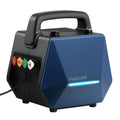
1,500 PSI at 2.5 GPM, 22.5 lb, 300-hour duty rating. More published flow than a $1,500 Kränzle, at a third of the price and 22.5 lb against its 80 — and enough pressure for anything a car needs without enough to worry about trim. Gen 2 adds an LED bar that mirrors output pressure as you turn the dial, faster trigger response and quieter running.
Shop NowThe MPro 25 is the one we point most people at. 2.5 GPM sits comfortably above every foam cannon's floor, it rinses a car noticeably faster than anything in the 1.2 GPM group, and at 22.5 lb you can carry it out with one hand. It runs on an ordinary 15-amp household circuit.

The professional's machine
MAXFLOW DDM - Bare Unit — $849.98
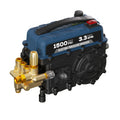
3.3 GPM at 1,500 PSI — the highest flow in the line, and the reason it's nicknamed the Detailer's Dream Machine. Rated for 800 hours, nearly triple the MPro platform, and it's actually the lightest of the three at 21.6 lb. A 15A/20A mode selector lets you run it on a normal outlet or unlock full output on a dedicated 20-amp circuit.
Shop NowBuy the DDM if washing cars is how you make money. 3.3 GPM against 2.5 is about a third more water per minute, which takes roughly a quarter off the time you spend rinsing each vehicle. That's small on one car and significant across a day of them. The 800-hour duty rating is the other half of the argument — nearly triple the MPro platform, built to absorb daily use rather than weekend use.
One caveat worth reading twice: the DDM ships with a NEMA 5-20P GFCI plug and runs in 15A mode by default. Full 20A output requires a properly installed 20-amp receptacle and deliberately switching the machine into 20A mode. Never run 20A mode through an adapter.

The specialist — read the note below
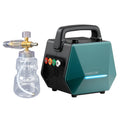
MAXFLOW MX3 - Bare Unit & Professional Foam Cannon — $489.99
2,500 PSI at 1.2 GPM, the pressure end of the range. Bundled here with the MFC1 Professional Foam Cannon, which ships with four orifices from 1.1 to 1.5 mm so you can size it down to suit the lower flow and still get usable foam.
Shop NowWe'll be straight about this one, because it's the machine most likely to be bought for the wrong reason. The MX3 is not the car-washing machine in this line-up. At 1.2 GPM it has the same rated flow as the Sun Joe and the Ryobi, which is below the 1.4 GPM most foam cannons want. If your main job is washing cars, buy the MPro 25 instead.
What the MX3 is genuinely good at is the work the other two deliberately give up: 2,500 PSI cuts baked-on grime off commercial vehicles, equipment, wheel wells and concrete far better than 1,500 PSI will. If you already own a flow machine and want a pressure machine beside it, or your work is heavy grime rather than paint, it earns its place. That's also why we bundle it with the cannon — sized down properly, the MFC1 gets real foam out of 1.2 GPM instead of drizzle.
Bare unit or kit? What you actually need in the box
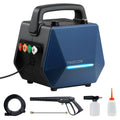
A bare unit is the machine, four quick-connect nozzles, an allen wrench, an oil bottle and a cleaning needle. No gun, no wand, no hose. That's the right buy if you already have pressure washer accessories and just want a better pump behind them. If you're coming from a garden hose and own nothing, you want a kit.

Start here if you own nothing
MAXFLOW MPro 25 Gen 2 - Standard Kit — $549.98
The MPro 25 Gen 2 plus spray gun, spray wand, foam blaster, four quick-connect nozzles and a 25' steel-braided hose. Everything needed to wash a car on day one, for $50 over the bare unit.
Shop Now
Wash to dry, in one box
MAXFLOW MPro 25 Gen 2 - Bare Unit, Quick Connects, 50' Hose & Drying Towel Bundle — $619.99
MPro 25 Gen 2 with the 8-piece quick connect kit, a 50' hose so you can park the machine and walk the car, and the oversized 1200 GSM twisted-loop drying towel to finish without water spots.
Shop NowBetween them, the Standard Kit is the better first purchase and the 50' bundle is the better one if you've washed cars before and already know that a 25-foot hose means moving the machine three times per car. One thing to note on the quick-connect kits: they're M22-14mm, which is what MAXFLOW machines output. They won't fit M22-15mm equipment.
The spec nobody compares: duty hours and whether you can service it
Peak pressure and flow tell you how a machine performs on day one. Duty rating tells you how many day ones you get.
MAXFLOW rates the MPro 25 and MX3 at 300 hours and the DDM at 800. Most consumer electric washers don't publish a duty figure at all, which is its own kind of answer. It's the same reason the pump matters — a sealed wobble-plate pump is a disposable part, and when it goes, the machine goes with it.
The other half is serviceability. MAXFLOW machines ship with an oil bottle because you're expected to change the pump oil, which is close to unheard of on an electric washer at this size. A machine you can maintain is a machine that lasts past the warranty.
What you'll want alongside it
Two things make a new machine noticeably better to live with, and neither is expensive.

Stop threading fittings
Quick Connect Plug — $6.50
Push-fit couplers so swapping between a foam cannon and a wand takes a second instead of a minute. Available in 3/8 and 1/4, male and female — match what's already on your gun and hose.
Shop Now
Save your hand
Pressure Washer Gun SG28 Easy Squeeze — $50.00
An easy-squeeze trigger gun. If you've ever had a cramping hand halfway through a wash, this is the fix — the stock gun on most machines takes far more grip force than it needs to.
Shop NowBeyond that, a longer hose is the upgrade people appreciate most and expect least. Moving the machine is the single most annoying part of washing a car, and 50 feet usually means you never move it at all.
Our picks, plainly
Washing your own cars at home: the MPro 25 Gen 2. 2.5 GPM is the sweet spot — well clear of every foam cannon's minimum, fast to rinse, light to carry, and on an ordinary household circuit. Take the Standard Kit if you don't already own a gun and hose.
Washing cars for money: the DDM. 3.3 GPM and an 800-hour duty rating are both bought for the same reason — volume. Make sure you have a 20-amp circuit to get the whole machine.
Heavy grime, equipment, commercial vehicles: the MX3, bundled with the foam cannon so the lower flow is accounted for. Not the choice for paint.
On a tight budget: honestly, a Sun Joe or a Ryobi will wash a car. You'll rinse slower, your foam will be thinner, and you probably won't be able to service it — but 1.2 GPM is not zero, and a cheap machine you own beats a good machine you don't. Just buy it knowing what you're trading, and size your foam cannon's orifice down to suit.
Frequently Asked Questions
Is PSI or GPM more important for washing a car?
GPM. Flow rate is what rinses dirt off the panel and what feeds a foam cannon thick foam. Pressure past roughly 1,500 PSI adds very little to a car wash and adds real risk to trim, badges and older paint. The Kränzle K1122TST, a longstanding professional detailing machine at around $1,500, runs just 1,400 PSI — but 2.1 GPM. That trade is the whole argument in one spec.
How many GPM do you need for a foam cannon?
At least 1.4 GPM for most cannons to make thick, clinging foam. Below that you can still get usable foam by fitting a smaller orifice — cannons like the MFC1 ship with several, from 1.1 to 1.5 mm — but you're compensating rather than solving. At 2.0 GPM and above, foam stops being something you have to tune.
What's the difference between max PSI and rated PSI?
Max is measured under ideal, momentary conditions. Rated is sustained output, and it's what certification programs like the PWMA verify. The gap can be large: the Sun Joe SPX3000 is marketed at 1.76 GPM but Sun Joe's own listing gives a certified rated flow of 1.2 GPM. Always compare rated figures.
Is 2500 PSI too much for car paint?
It's more than a car needs, and it narrows your margin for error. Healthy modern clear coat will tolerate it at a sensible distance with a wide tip, but 2,500 PSI will lift loose trim, worry old decals and damage failing paint far more readily than 1,500 PSI. For washing cars we'd take flow over that pressure every time. The MX3's 2,500 PSI is aimed at equipment and commercial vehicles, not paint.
Which MAXFLOW pressure washer is best for detailing?
The MPro 25 Gen 2 for most people, at 2.5 GPM and 1,500 PSI. The DDM if you're washing cars professionally and want 3.3 GPM plus an 800-hour duty rating. The MX3 is the odd one out — high pressure, low flow, built for grime rather than paint.
Do I need a 20-amp circuit for the MAXFLOW DDM?
Not to run it. The DDM ships with a NEMA 5-20P GFCI plug and operates in 15A mode by default on a normal household circuit. Full 3.3 GPM output requires connecting directly to a properly installed 20-amp receptacle and switching the machine into 20A mode. Never run 20A mode through an adapter.
Can I use my existing hose and gun with a MAXFLOW?
Usually yes. All three machines take a standard 3/4" GHT garden hose on the inlet and output M22-14mm, which is the common thread on detailing accessories. Check whether your equipment is M22-14 or M22-15 before you order quick connects — the two are not interchangeable.
Related Reading
Buy Flow, Not Pressure
The MAXFLOW line, plus the guns, hoses and quick connects to go with it — shipped from our Orlando shop, or come see us in Kissimmee.
Shop Now →