Car Interior Cleaning Guide: The Right Products for Every Surface
Your car's interior takes more abuse than the exterior ever will. Spilled coffee, ground-in dirt from shoes, UV damage on the dashboard, french fries wedged between seats from last year — it all adds up. And unlike exterior paint, interior surfaces are a mix of completely different materials that each need a different approach.
This guide breaks down every surface inside your car, what products actually work on each one, and the order you should clean them in. Whether you're building your first car interior cleaning kit or upgrading to a proper interior car detailing kit, this is the playbook.
The Symplex Swap
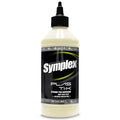
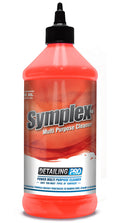
From Symplex: Plasti-K Xtreme Internal to dress the dash with a non-reflective satin, and the MPC diluted for mats, pedals and trim.

Symplex Plasti-K Xtreme Internal $22.99
Non-silicone interior dressing with a non-reflective satin finish and UV protection.

Symplex Concentrate MPC from $12.99 · gallon $29.99 (about $0.23/oz)
Shop cleaner: 1:1 heavy-duty, 1:10 general, 1:20 light, and diluted for non-delicate interior touch points like mats and pedals.
Symplex manufactures in Orlando.
The Golden Rule: Work Top to Bottom, Dry to Wet
Before we get into surfaces, here's the workflow that professionals use every single time. Skipping the order or jumping ahead is how you end up re-cleaning surfaces you already finished.
- Remove trash and personal items. Everything comes out — floor mats, seat covers, loose items.
- Vacuum everything. Seats, carpets, crevices, trunk. Do this before applying any liquids.
- Clean top to bottom. Start with the headliner, then dashboard, doors, center console, seats, and finally the floor and carpets. Gravity is your friend — dirt and cleaning solution drip down.
- Glass last. Interior glass always gets cleaned last because every other step can leave overspray or residue on it.
Leather Seats & Surfaces
Leather is the most misunderstood interior surface. Most factory "leather" in modern cars is actually coated leather — the hide has a protective polyurethane topcoat that gives it color, UV resistance, and stain protection. Cleaning and conditioning this coating is what keeps your leather looking new. Use the wrong product and you strip that coating permanently.
A dedicated leather cleaner with a neutral to slightly alkaline pH is essential. Avoid all-purpose cleaners on leather — they can degrade the protective coating over time. Follow up with a water-based conditioner every 2–3 months to keep the coating supple and prevent cracking.
All-in-one clean and condition for coated leather. Gentle formula that cleans without stripping. German-engineered and used in professional shops across Europe. One product handles both steps — clean and condition in a single application.
View Product →Natural pH-balanced formula that's safe for repeated use on neglected leather. Excellent at lifting ground-in grime from seat bolsters and armrests. Pairs perfectly with Gyeon's Leather Coat for long-term protection.
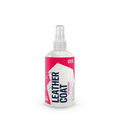
View Product →Ceramic-based leather protection that creates a hydrophobic barrier repelling spills and making future cleaning easier. Apply after cleaning for 6+ months of protection. The best way to keep leather looking factory-new.
View Product →Concentrated professional-grade leather cleaner used by detail shops. A little goes a long way. Best for detailers or serious enthusiasts who clean leather frequently and want maximum cleaning power per dollar.
View Product →How to Clean Leather
- Vacuum the seat to remove loose debris from seams and crevices.
- Spray leather cleaner onto a soft microfiber towel or brush — not directly onto the seat. This prevents oversaturation.
- Wipe in straight lines (not circles) with light pressure. For stubborn grime in seat bolsters and seams, use a soft-bristle interior brush.
- Wipe dry with a clean microfiber towel.
- Apply conditioner sparingly with a foam applicator. Let it absorb for 5–10 minutes, then buff off excess.
Fabric & Carpet
Fabric interiors are more forgiving than leather in some ways but stain much more easily. Coffee spills, food, pet hair, and ground-in dirt are the usual enemies. The key with fabric is agitation plus extraction — you need to loosen the dirt and then pull it out, not just push it around with a towel.
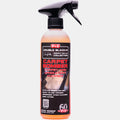
The go-to carpet and fabric cleaner for professional detailers. Concentrated formula that foams up nicely, loosens embedded dirt, and works great with an extractor or brush agitation. At under $12, it's the best value in the category.
View Product →Premium fabric cleaner effective on seats, carpets, and headliners. Safe on all fabric types including Alcantara when used as directed — but handle it carefully: Gyeon's safety sheet classifies it as causing severe skin burns and eye damage and as possibly damaging fertility or the unborn child. Wear nitrile gloves and eye protection, ventilate while you work, and if you're pregnant, have someone else use it. More expensive than Carpet Bomber but delivers excellent cleaning power on heavily soiled fabric.
View Product →Aerosol foam cleaner that clings to vertical surfaces — great for door panels and seat bolsters. At $6, it's the most affordable option in our lineup. Perfect for quick interior touch-ups between deep cleans — but note it's an extremely flammable pressurized aerosol: open the doors for airflow while you spray and keep it away from heat and ignition sources.
View Product →How to Clean Fabric Seats & Carpet
- Vacuum thoroughly, using a crevice tool in seams and under seat rails.
- Spray fabric cleaner onto the surface (or a brush for heavy stains).
- Agitate with a medium-stiffness interior brush in overlapping strokes.
- Blot with a microfiber towel to absorb loosened dirt. Don't rub — rubbing pushes stains deeper.
- For best results, follow up with a hot water extractor to pull dissolved dirt out of the fabric.
- Let the seats dry completely (crack the windows or use a fan) to prevent mildew.
Dashboard, Door Panels & Hard Plastics
The dashboard, center console, and door panels are typically made of vinyl or hard plastic with a textured finish. These surfaces collect dust, fingerprints, and UV damage over time. The textured grain traps dirt that a simple wipe can't reach — you need a brush to get into the texture, then a protectant to prevent future damage.
Quick interior detailer that cleans and leaves a light satin finish. One-step product — spray, wipe, done. Doesn't leave surfaces greasy or attract dust. A favorite in the professional detailing community and the best bang-for-buck interior product we carry.
View Product →Premium interior cleaner and protectant that leaves a completely natural, matte finish with UV protection. Safe on screens, leather, plastic, and vinyl. The cleanest finish of any product in this category.
View Product →Water-based interior dressing that's fully dilutable. At 4:1 it's a light protectant; at 1:1 it gives a richer satin finish. The concentrate is strongly alkaline — wear nitrile gloves when mixing and applying. Concentrated formula means one bottle lasts months. Great for dashboards, trim, and door panels.
View Product →A true all-purpose cleaner that works across plastics, vinyl, rubber, and fabric. Dilutable for light maintenance or use at full strength on heavy grime — with gloves and eye protection at full strength, and the cabin ventilated. Pairs well with Quan Finish Dress All — clean with the APC first, then dress for protection.
View Product →Water-based all-surface dressing that works on interior and exterior plastics. Clean satin finish without the greasy feel. Available up to 55 gallons for professional use.
View Product →How to Clean Hard Interior Surfaces
- Dust first with a soft detailing brush to dislodge particles from textured surfaces and vents.
- Spray your APC (like Quan All Purpose Cleaner) or interior detailer onto a microfiber towel — never directly on electronics or screens.
- Wipe in one direction, folding the towel frequently to expose clean sides.
- For textured surfaces with embedded grime, use a soft detailing brush sprayed with cleaner, then wipe.
- Apply protectant/dressing with a separate clean applicator or towel.
Interior Glass
Interior glass is trickier than exterior glass because of the film that builds up on the inside of your windshield. This hazy film comes from off-gassing plastics, vinyl, and leather in your dashboard — especially in newer cars. It gets worse in heat and direct sunlight.
Use a dedicated automotive glass cleaner and a waffle-weave microfiber glass towel. The waffle texture grabs film and residue better than a standard microfiber. If you have tinted windows, use an ammonia-free formula — ammonia degrades tint film over time.
Concentrated ammoniated glass cleaner that cuts through interior windshield haze in one pass. Dilute to your preferred strength — a single bottle lasts months. Leaves zero streaks when buffed with a waffle-weave towel. One of the best values in glass cleaning.
View Product →How to Clean Interior Glass
- Spray your glass cleaner (Quan Gleam diluted to strength) onto the towel, not the glass. Overspray on the dash creates new mess.
- Wipe in straight, overlapping lines — not circles.
- Flip the towel and buff dry immediately.
- Check at an angle in sunlight for streaks. Hit any remaining haze with a second pass.
- For the windshield, reach awkward areas with the towel wrapped around a flat tool or your hand positioned palm-up.
Odor Elimination
If your car smells and you can't find the source, the smell is usually embedded in the headliner, carpet, or seat fabric. Air fresheners just mask the problem — they don't eliminate it. You need a product that neutralizes odor molecules or uses enzymes to break down the organic source.
Professional-grade odor eliminator that neutralizes smells at the molecular level rather than masking them. Effective on smoke, food, pet, and mildew odors. Spray on fabric surfaces, let dwell, then extract or let air dry.
View Product →Enzyme-based formula that breaks down organic odor sources. Works particularly well on biological smells — pet accidents, spilled milk, food. More expensive but extremely effective on stubborn odors that other products can't touch.
View Product →Budget vs. Premium: Build Your Interior Cleaning Kit
Whether you're starting from zero or upgrading your setup, here's what a complete interior car cleaning kit looks like at two price points. Every product listed below is available at autocaregenius.com.
- P&S Xpress Interior — $10.99
- Quan All Purpose Cleaner — $11.99
- P&S Carpet Bomber — $11.99
- Vonix Higicouro Leather Cleaner — $9.00
- Affinity Dressing — $15.99
- Quan Gleam Glass Cleaner — $11.99
- Koch-Chemie Leather Star — $19.99
- Gyeon Leather Coat — $24.99
- Gyeon Fabric Cleaner — $24.99
- Quan Finish Dress All — $21.99
- Quan All Purpose Cleaner — $11.99
- Koch-Chemie Fresh Up — $25.99
- P&S Xpress Interior — $10.99
- Quan Gleam Glass Cleaner — $11.99
- Brush set + microfibers — ~$30
The budget essentials kit gets you everything you need to maintain every surface for around $70. If you want the best results — ceramic leather protection, enzyme-based odor elimination, and premium fabric cleaning — the full detail kit covers all of it. Either way, every product is available individually at autocaregenius.com.
How Often Should You Clean Your Car's Interior?
Consistency matters more than intensity. A quick weekly wipe-down prevents the buildup that makes deep cleans necessary. Here's the schedule that professionals recommend:
| Task | Frequency | Time Required |
|---|---|---|
| Quick wipe-down (dash, console, steering wheel) | Weekly | 5–10 min |
| Vacuum seats and floors | Every 1–2 weeks | 10–15 min |
| Glass cleaning (interior) | Every 2–4 weeks | 10 min |
| Full interior detail (all surfaces) | Monthly or quarterly | 45–90 min |
| Leather conditioning | Every 2–3 months | 15–20 min |
| Fabric extraction / deep clean | Every 3–6 months | 1–2 hours |
| Odor treatment | As needed | 15–30 min |
Quick-Reference: Best Product for Each Surface
| Surface | ACG Pick | Price | Budget Alternative |
|---|---|---|---|
| Leather | Koch-Chemie Leather Star | $19.99 | Lexol Kit (~$14.99) |
| Fabric & Carpet | P&S Carpet Bomber | $11.99 | Folex (~$8.99) |
| Dashboard & Plastics | P&S Xpress Interior | $10.99 | 303 Aerospace (~$17.99) |
| Glass | Quan Gleam | $11.99 | Invisible Glass (~$6.99) |
| Odor | Koch-Chemie Fresh Up | $25.99 | Ozium (~$6.99) |
| All-Purpose | Quan All Purpose Cleaner | $11.99 | Simple Green (~$5.99) |
Final Tips
Always spray onto the towel, not the surface. This gives you better control and prevents overspray onto screens, gauges, and buttons.
Microfiber quality matters. Cheap microfiber towels can scratch piano-black trim and infotainment screens. Use plush, 300+ GSM towels for interior work.
Don't forget the steering wheel. It's the dirtiest surface in your car — more bacteria than a toilet seat. Clean it every time you detail the interior.
Match the product to the surface. The single biggest mistake in interior detailing is using one product on everything. Leather, fabric, plastic, and glass each need different chemistry. That's why a proper interior car detailing kit has at least 3–4 dedicated products, not one all-purpose spray.
A clean interior isn't just about appearance — it preserves your car's resale value, makes driving more enjoyable, and honestly just feels better. With the right products and a systematic top-to-bottom approach, a full interior detail takes 45 minutes for maintenance cleans and 1–2 hours for a deep session. That's a small investment for a car that looks and smells like new.
Every Surface. One Collection.
Shop professional-grade interior cleaning products — leather care, fabric cleaners, dressings, and odor eliminators. Free shipping on orders over $75.
Shop Interior Collection →