Price Smarter, Earn More: The Detailer's Complete Pricing Guide
Most detailers undercharge. Not because they're not good at what they do — because they learned to price from other undercharging detailers, built their rates on gut feeling, and never sat down to do the math. This guide fixes that.
We'll walk through five actionable pricing strategies that professional detailers use to increase their revenue per job without adding more jobs to the schedule. No vague advice. Real numbers, real frameworks, and the math to back them up.
Why Most Detailers Undercharge
The detailing industry has a chronic undercharging problem rooted in how most detailers enter the business. They start as enthusiasts, charge what feels "fair," watch what competitors charge, and set their rates to match — usually at the lower end to win jobs. The result is a race to the bottom that affects everyone in the market.
The underlying math tells a different story than the prices suggest. When you account for product cost, drive time, setup time, the physical wear of the work itself, equipment depreciation, and the administrative overhead of running a business, the hourly rate many detailers are actually earning is much lower than they think — often well below what they need to sustain a profitable operation.
The good news: you don't need more customers to earn more money. You need smarter pricing. Every strategy in this guide applies to your existing customer base starting with your next booking.
Tip 1: Price by Vehicle Size, Not Just Service Type
This is the fastest, lowest-friction pricing change you can make today. If you're charging the same price to detail a Chevy Spark and a Chevy Suburban, you're working harder on the Suburban for the same money — every time.
Vehicle size affects everything: interior square footage, number of panels, glass surface area, the amount of product you use, and the time the job takes. A full interior detail on a large SUV or crew cab truck can take 1.5–2× longer than the same service on a sedan. Your pricing should reflect that reality.
How to Structure Vehicle Size Tiers
| Tier | Vehicle Types | Upcharge vs. Base |
|---|---|---|
| Standard | Sedans, coupes, hatchbacks, small crossovers | Base price — no adjustment |
| Large | Midsize SUVs, minivans, standard pickup trucks | +$25–$35 per service |
| XL / Oversized | Full-size SUVs, crew cabs, large vans, lifted trucks | +$45–$65 per service |
The exact numbers will depend on your market and your rates, but the principle is non-negotiable: bigger vehicles cost more to service. Customers understand and accept this — airlines, hotels, and rental car companies all charge by size. You should too.
Tip 2: Build Tiered Packages, Not À La Carte Menus
When customers see a list of individual services with prices, they do math. They decide what they actually need, skip everything that seems like a luxury, and pick the most basic option that solves their immediate problem. Your average ticket stays low because customers are optimizing for minimum spend.
When customers see three packages — Bronze, Silver, Gold; Maintain, Restore, Perfect; whatever your naming convention — a completely different psychological dynamic kicks in. Most customers anchor to the middle option. The cheapest feels like they're skimping. The most expensive feels like excess. The middle feels like the smart choice. This is called the compromise effect, and it's one of the most reliable patterns in consumer behavior research.
Sample Package Structure
- Exterior hand wash & dry
- Wheel & tire cleaning
- Glass cleaning (exterior)
- Interior vacuum & wipe-down
- Tire dressing
- Everything in Maintain
- Clay bar decontamination
- Paint sealant application
- Full interior detail
- Leather conditioning
- Engine bay wipe-down
- Everything in Restore
- Single-stage paint correction
- Ceramic coating application
- Headlight restoration
- Fabric/leather protection
- Full decontamination wash
These prices are illustrative — calibrate to your market. The important thing is the ratio: your middle package should be priced at roughly 2× your base package, and your top package at 3.5–4×. That spread makes the middle feel proportional and the top tier feel like a premium worth considering.
Tip 3: Know Your Cost Per Job — Then Price Over It
Before you can price confidently, you need to know what it actually costs you to perform each service. Most detailers skip this step and end up pricing on vibes. That's fine when you're busy, but it means you have no idea whether a slow month is a revenue problem or a profitability problem — and you can't fix what you can't measure.
Your cost per job has four components: product cost, labor cost (your own time), overhead allocation (equipment, insurance, vehicle costs amortized across jobs), and any subcontract costs. For solo operators, the formula looks like this:
Product Cost (oz used × cost per oz)
+ Labor Cost (hours × your target hourly rate)
+ Overhead (monthly fixed costs ÷ avg jobs per month)
+ Drive Time (if mobile — hours × hourly rate)
Most detailers underestimate product cost because they buy retail-sized bottles and don't track usage. When you're pulling a 32oz bottle of wheel cleaner off a shelf and using a third of it per job, it's hard to calculate cost-per-application intuitively. The solution isn't better math — it's bulk sizing.

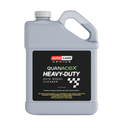
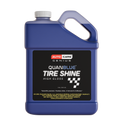
A professional detailer using Quan Brown on 20 cars per month saves significantly by moving to gallon or 5-gallon sizing. Switching from 32oz retail to a 5-gallon jug typically reduces cost-per-application by 45–60% — margin that goes straight to the bottom line on every job, with zero change to your retail pricing.
View Sizes & Pricing →The Bulk Math in Practice
| Product Size | Unit Cost (Example) | Est. Applications | Cost Per Application |
|---|---|---|---|
| 32 oz | $13.99 | ~15 | $0.93 / application |
| 1 Gallon | $34.99 | ~60 | $0.58 / application |
| 5 Gallon | $119.99 | ~300 | $0.40 / application |
| 55 Gallon | Contact for pricing | ~3,300 | Lowest cost per oz ✓ |
The product cost difference between a part-time detailer buying 32oz retail and a busy shop buying 5-gallon jugs can represent thousands of dollars per year — on the same products, applied the same way. Your prices stay the same. Your margins improve automatically.
Tip 4: Upsell at Drop-Off, Not at Booking
Timing determines whether an upsell feels helpful or pushy — and the highest-converting moment in the detailing customer journey is drop-off, not booking. Here's why: at booking, the customer is making a buying decision under low information and low commitment. They're price-sensitive and in evaluation mode. At drop-off, they're already committed, they trust you enough to leave their car with you, and they're physically present with the vehicle in question.
A 30-second walkaround with the customer before they hand you the keys changes everything. You're not selling them something abstract — you're showing them specific, visible problems on their specific car, and you're right there to solve them today.
High-Converting Drop-Off Upsells
| What You Notice | What You Offer | Typical Add-On Price |
|---|---|---|
| Swirl marks visible in paint | Single-stage paint correction | $150–$300 |
| Oxidized or faded headlights | Headlight restoration | $75–$125 |
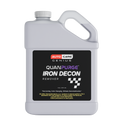
| Brake dust baked on wheels | Wheel decontamination with Quan Purge | $40–$80 |
| Stained or smelly fabric interior | Steam extraction / odor treatment | $80–$150 |
| Unprotected paint after detail | Sealant or ceramic coating upgrade | $100–$500+ |
Tip 5: Introduce a Maintenance Subscription Plan
A customer who pays you $175 for a detail once is valuable. A customer who pays you $65/month on a maintenance plan is worth $780 per year — guaranteed, predictable, and requiring zero additional acquisition cost after the first sale. At 20 maintenance customers, that's $15,600 in locked revenue before you book a single new job.
Maintenance plans solve the most fundamental problem in the detailing business: revenue unpredictability. When your schedule has slow weeks and you're scrambling for last-minute bookings, those gaps get expensive fast. A subscription base acts as a floor — guaranteed work that fills your schedule and lets you take on additional jobs on top of it rather than in place of necessary income.
How to Structure a Maintenance Plan
| Plan | Frequency | Services Included | Price / Month |
|---|---|---|---|
| Standard Maintain | 1× / month | Hand wash, wheels, tires, glass, vacuum, wipe-down | $60–$80 |
| Premium Maintain | 2× / month | Standard + interior deep clean, tire dressing, interior protectant | $110–$140 |
| Elite Maintain | 4× / month | Premium + quarterly clay bar + seasonal sealant refresh | $200–$240 |
Price your plans at a 10–15% discount versus paying per visit. This is the incentive to subscribe — but because you're locking in volume and eliminating the re-acquisition cost on every visit, you maintain your effective margin even with the discount. The math works in your favor.
How Bulk Product Sizing Protects Your Margin as You Scale
One of the most overlooked levers in a detailing business is product cost management. As your volume grows — whether from more jobs, more upsells, or a growing maintenance plan base — your product consumption grows with it. The detailers who build sustainable margins are the ones who match their purchasing strategy to their volume.
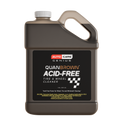
The Quan Collection is built for exactly this. Every product in the line is available from 32oz through 55-gallon, so you can start small and scale your purchasing as your business grows — without ever switching products, changing your workflow, or retraining on new chemistry — though remember Quan Brown (strongly alkaline) and Quan AcidX (a professional-only mineral acid) are opposite-end chemistries with their own separate PPE and handling requirements, not interchangeable substitutes.


Sample Pricing Table by Market
Pricing benchmarks vary significantly by geography, but here's a reference range you can use as a starting point. These represent the median range for professional detailers, not budget operations or dealership wash-and-vac services.
| Service | Small Market | Mid-Size Market | Major Metro |
|---|---|---|---|
| Exterior Hand Wash | $40–$60 | $55–$85 | $75–$120 |
| Interior Detail | $80–$120 | $110–$175 | $150–$250 |
| Full Detail (In + Out) | $150–$220 | $200–$350 | $300–$500 |
| Paint Correction (1-stage) | $200–$350 | $300–$500 | $400–$700 |
| Ceramic Coating | $600–$1,200 | $900–$1,800 | $1,200–$3,000+ |
| Headlight Restoration | $60–$90 | $80–$120 | $100–$150 |
If your current pricing is consistently below the "small market" column, that's a sign you're leaving money on the table — even in a cost-conscious area. Raising prices by 15–20% rarely costs you the volume of customers you fear. Most customers who value professional detailing are not shopping on price; they're shopping on trust and results.
5 Pricing Mistakes to Stop Making
Build a More Profitable Detailing Business.
The Quan Collection is built for professional detailers — from 32oz to 55-gallon, every size for every scale. Free shipping on orders over $75.
Shop the Quan Collection →