Tire shine is one of those products almost everyone applies wrong on their first try. Mist it on a wet tire and it sheets off the moment you drive. Apply it without a wipe-down and it flings onto your fenders at 40 mph. Skip the prep step and it lasts three days instead of three weeks. The chemistry isn't the issue — the technique is.
This is the application method we teach every detailer who walks into our Kissimmee shop. It works in Florida heat, holds up against humidity and salt air, and gets you the same factory-deep black on rubber that you see on show cars. Two minutes per tire, zero fling, and 14+ days of durability if you do it right.
Quick Answer
To apply tire shine without slinging: clean the tire with APC and a stiff brush, towel-dry it completely, apply tire shine to a foam applicator (never directly to the tire), wipe in even straight passes, let it dwell 5-10 minutes, then wipe off any unabsorbed product with a clean microfiber. Quan Orange Slingless if you want zero fling, Quan Blue for high gloss, Quan Clear Non-Silicone for matte and ceramic-coating safety.

Free Tire Applicator
Buy any 2 32oz Quan Tire Shine bottles or any gallon of Quan Tire Shine and receive a free tire applicator at checkout (online only).
Shop Tire ShinesWhy Most Tire Shine Fails
Three reasons tire shine flings off, fades fast, or never looks right in the first place. Knowing them is the difference between a 3-day shine and a 3-week shine.
1. Wet rubber rejects dressing. If there's any moisture left on the tire face after washing, the dressing hydroplanes — it sits on top of the water film instead of bonding to the rubber. The first drive sheds it onto your fenders.
2. Old residue blocks the new product. Last month's tire shine, road grime, brake dust, and tire oils all create a contamination layer. New dressing can't penetrate it, so the product sits on top, dries unevenly, and breaks down within days.
3. Direct spraying causes uneven coverage. Spraying directly onto the tire face puts dressing on the rubber AND on the wheel and brake caliper, where it doesn't belong — and these dressings are classified as highly flammable, so keep them off brake rotors, calipers and exhaust components, work on cool wheels, and let the dressing flash off before you drive. Worse, spray pattern overlap leaves streaks that show as soon as the tire dries.
What You Need Before You Start
Five-minute prep saves you 30 minutes of redo. Get these together first, then start.

House Brand
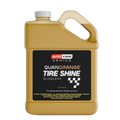
Quan Orange Tire Shine Slingless
Sling-free water-based formula engineered to bond to rubber and stay there even at highway speeds. The pick if you've ever had tire shine fly onto fenders or paint. Two-week durability in Florida heat.
Shop Now
House Brand
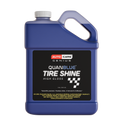
Quan Blue Tire Shine
High-gloss water-based tire shine. Wet-look finish, easy application, no greasy residue. Use weekly for the deep-black show-car look. Pairs well with the Quan Pink wash for full daily-driver maintenance.
Shop Now
House Brand
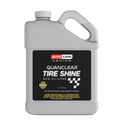
Quan Clear Tire Shine Non Silicone
Non-silicone, matte-finish tire dressing. Ceramic-coating safe — won't contaminate paint or interfere with hydrophobic coatings. The pick for daily drivers and detail-shop pros who want clean rubber without wet-look gloss.
Shop NowPlus you'll need:
- Foam applicator pad (Max Shine dressing applicator works best — wedge shape gets into the inner sidewall)
- Stiff tire brush for the prep wash
- All-purpose cleaner (Quan Wave APC at 1:10 dilution)
- Two clean microfiber towels — one for drying, one for wiping excess
- Wheel cleaner if the tires haven't been deep-cleaned recently
Pre-Application: Why the Prep Decides Everything
This is the step nobody wants to do, and it's why most tire shine jobs fail. If you're not willing to spend two minutes per tire prepping the surface, no amount of premium dressing is going to last.
Pro Tip
Use a different microfiber for tire drying than you use for paint. Tire surfaces grind microscopic rubber and grit into the fibers. Cross-contamination from a tire towel onto your paint causes swirl marks. Color-code or write "TIRE" on a Sharpie tag.
The 7-Step Application Method
Once the tire is clean, dry, and prepped, the application itself takes 60-90 seconds per tire. Done right, you get even coverage with zero fling and 14+ day durability in Florida conditions.
Choosing Your Gloss Level
Tire shine isn't one-size-fits-all. Match the formula to the look you want and the car you're working on.
Wet-look high gloss — Quan Blue Tire Shine. The traditional show-car finish. Deep, glossy, reflective. Best on dark-paint cars where contrast pops. Reapply weekly for sustained shine.
Sling-free satin — Quan Orange Slingless. Slightly less glossy than Blue but engineered to never fling. The pick for daily drivers, highway commuters, or anyone who's had bad past experiences with dressing on fenders.
Matte / factory-natural — Quan Clear Non-Silicone. The natural rubber look without obvious dressing sheen. Ceramic-coating safe. The pick for daily drivers and detail-shop pros who don't want the wet-look gloss.
Pro Tip
Mixing styles works. Apply Quan Blue for a Saturday show, switch to Quan Clear for the daily drive Monday-Friday. The Quan formulas don't conflict — you can layer or alternate without contamination.
Florida-Specific Considerations
Florida cars take more abuse than the rest of the country. Tire shine durability gets cut roughly in half by UV intensity and humidity. A formula that lasts 30 days in Ohio lasts 14 days in Orlando.
UV exposure is the #1 killer. Outdoor-parked Florida vehicles need bi-weekly application minimum. Garaged cars stretch to monthly. Always finish with a UV-protected formula (the Quan lineup has UV blockers built in).
Humidity changes how dressings cure. High humidity slows the bond — extend dwell time to 10-12 minutes during summer months. The dressing needs more time to penetrate when ambient moisture is high.
Salt air within 5 miles of the coast accelerates rubber breakdown. The dressing acts as a barrier — applying every 10-12 days protects the rubber AND keeps the tire looking new.
Heat matters at application time. Don't apply tire shine to hot tires. Drive 10 minutes, let them sit 20 minutes, then start the wash-and-dress process. Hot rubber flash-evaporates the carrier, locking dressing onto the surface unevenly.
Common Mistakes That Ruin the Result
If you've been frustrated with tire shine results, almost certainly one of these is the cause.
- Skipping the towel-dry step. Wet tires reject dressing. Always towel-dry, every time, no exceptions.
- Spraying directly on the tire. Causes overspray onto wheels and brakes, uneven coverage, and visible streak lines after the dressing dries.
- Skipping the dwell time. Five to ten minutes isn't optional — it's how the dressing bonds. Without dwell, you're applying a coating that flings off in three minutes.
- Skipping the final wipe. The wipe-off pass is what eliminates flinging and gives a uniform finish. Don't cut this corner.
- Using the same towel for tires and paint. Cross-contamination from rubber grit causes swirl marks on paint. Dedicate towels to tire-only use.
- Applying to hot tires. Heat flash-dries the carrier, locking dressing on unevenly. Wait until tires are cool to the touch.
- Reapplying without re-cleaning first. New dressing on top of old dressing builds up an uneven film. Always APC + brush before each new application.
How Often to Reapply
Tire shine isn't a one-and-done product. Plan for:
- Weekly if you want the consistent show-car wet-look finish (Quan Blue)
- Bi-weekly for daily driver maintenance with Quan Orange Slingless or Quan Clear Non-Silicone
- Monthly for garaged vehicles or low-mileage cars
Florida summer (June through September) cuts these intervals in half — UV and afternoon thunderstorms strip dressings 2x faster than the rest of the year.
Frequently Asked Questions
How long does tire shine take to dry?
Tire shine "dwell time" is 5-10 minutes for bonding. After dwell + final wipe, the dressing is touch-dry in 5-10 more minutes. Don't drive for 30 minutes total to let the bond fully cure.
Why does my tire shine sling off?
Three causes: (1) tires were wet when you applied, (2) you skipped the dwell time, or (3) you skipped the final wipe-off step. Address all three and slinging stops immediately. For absolute fling-free results, switch to Quan Orange Slingless.
Can I apply tire shine in direct sun?
Avoid it. Direct sun heats rubber above 110°F, which flash-dries the dressing carrier and locks the product onto the surface unevenly. Work in shade or early morning. Never apply tire shine to hot tires.
Is silicone tire shine bad for tires?
Long-term silicone use can dry rubber and accelerate sidewall cracking. Quan Clear Non-Silicone is the safer choice for repeated use, especially on vehicles you plan to keep long-term. For show cars where you reapply weekly anyway, silicone-based dressings give the best gloss.
Can tire shine damage my paint?
Quality water-based dressings (like the Quan lineup) wash off paint without staining. Solvent-based dressings can leave permanent residue if they sling onto paint and aren't cleaned immediately. Stick with water-based for safety, or use Quan Orange Slingless to eliminate the fling risk entirely.
Do I need to remove old tire shine before applying new?
Yes — APC + stiff brush wash before every reapplication. New dressing on top of old creates an uneven film that breaks down faster. The 2 minutes of prep saves you a redo within a week.
Ready to Try It?
Shop the full Quan tire shine lineup — Blue, Orange Slingless, Clear Non-Silicone, plus Max Shine applicators. Free pickup in Kissimmee or fast US shipping.
Shop Tire Shines →